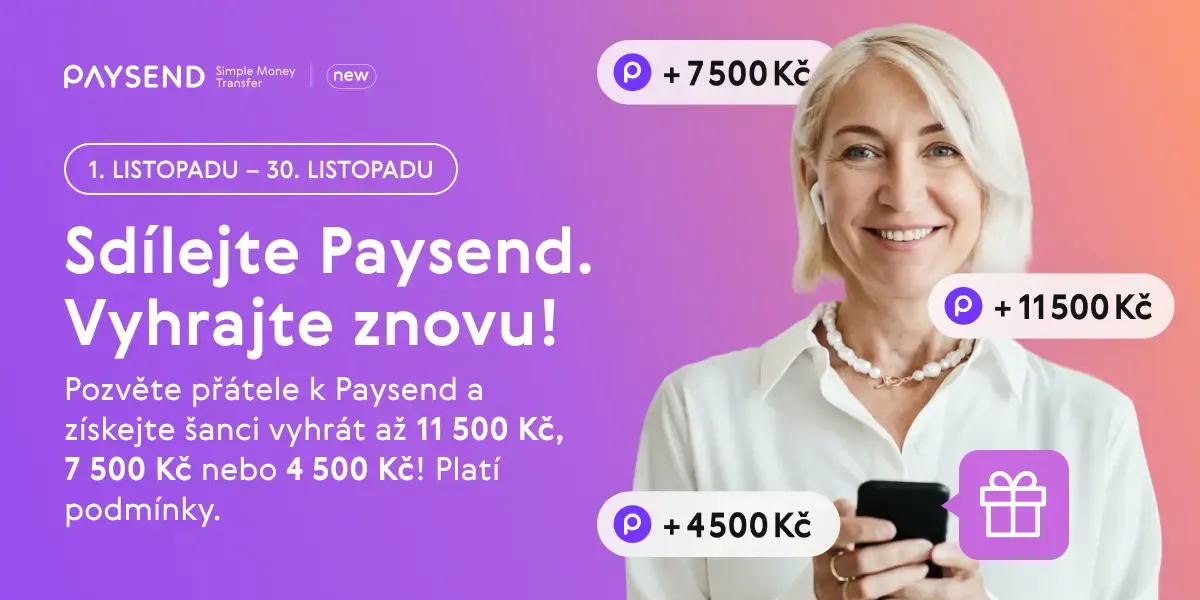
Vaše druhá šance vyhrát až 11 500 Kč, 7 500 Kč nebo 4 500 Kč s Paysend!
Sledujte svůj e-mail a naše sociální sítě — už brzy oznámíme říjnové výherce!
Neuspěli jste minule? Žádný problém — máte druhou šanci!
Soutěž Paysend pokračuje i v listopadu — získejte novou příležitost vyhrát až 11 500 Kč, 7 500 Kč nebo 4 500 Kč (nebo ekvivalent) v bonusech Paysend.
Jak se zapojit:
Od 1. do 30. listopadu 2025 pozvěte své přátele a rodinu k používání Paysend.
Každé úspěšné pozvání — když váš přítel provede svůj první převod — se počítá jako jeden vstup do slosování.
Co můžete vyhrát:
🥇 11 500 Kč (nebo ekvivalent v místní měně)
🥈 7 500 Kč (nebo ekvivalent)
🥉 4 500 Kč (nebo ekvivalent)
Čím více přátel pozvete, tím větší máte šanci na výhru.
A i když tentokrát nevyhrajete, stále můžete využít náš program „Pozvi přítele“, kde získáte 58.5 Kč za každý z prvních 12 převodů vašeho přítele (až 702 Kč celkem).
Disclaimer:
Pro obyvatele EHP a Spojeného království starší 18 let. Platí od 1. do 30. listopadu 2025. Úplné podmínky: https://paysend.com/marketing-tc Pořadatel: Paysend Group Limited.
Nejnovější příspěvky

Poznejte Pavla Šticha: jak pomáhá českým a slovenským čtenářům posílat peníze domů
Každý měsíc posílá tisíce lidí pracujících v Česku část výplaty domů – mnozí z nich jsou Ukrajinci, kteří podporují rodinu za hranicemi. A tradiční cesta ztěžuje to, co by mělo být jednoduché: bankovní převody vyžadující IBAN a SWIFT kódy, poplatky, které se objeví až poté, co peníze odešly, a dny čekání, zatímco doma na ně někdo spoléhá.
Pavel Štich pomáhá svým čtenářům řešit přesně tento problém už léta. Je spoluzakladatelem a šéfredaktorem pro finance na Moneyo.cz – nezávislé české platformě, která porovnává služby pro zasílání peněz, akciové brokery a alternativní investice – a zároveň Ambasadorem Paysend, což znamená, že vše, co doporučuje, osobně testuje, vysvětluje srozumitelně a svým čtenářům přináší exkluzivní výhody. Zeptali jsme se ho, jak Moneyo vzniklo, kdo ho čte a proč si vybral Paysend.

Sending money digitally is quick and convenient, but it also involves important security, verification, and fraud prevention checks. In most cases these checks happen automatically in the background.
If you’ve ever wondered why Paysend asks you to verify your identity, why a transfer might be reviewed, or how your money is protected, the answer is simple: these processes are designed to keep you, your money, and your recipient safe.
Every digital money transfer relies on trust, regulation, and security systems working together. While these checks can sometimes feel like an extra step, they are a standard and essential part of how modern money transfers stay secure.


