How Mexicans Abroad Keep Day of the Dead Traditions Alive
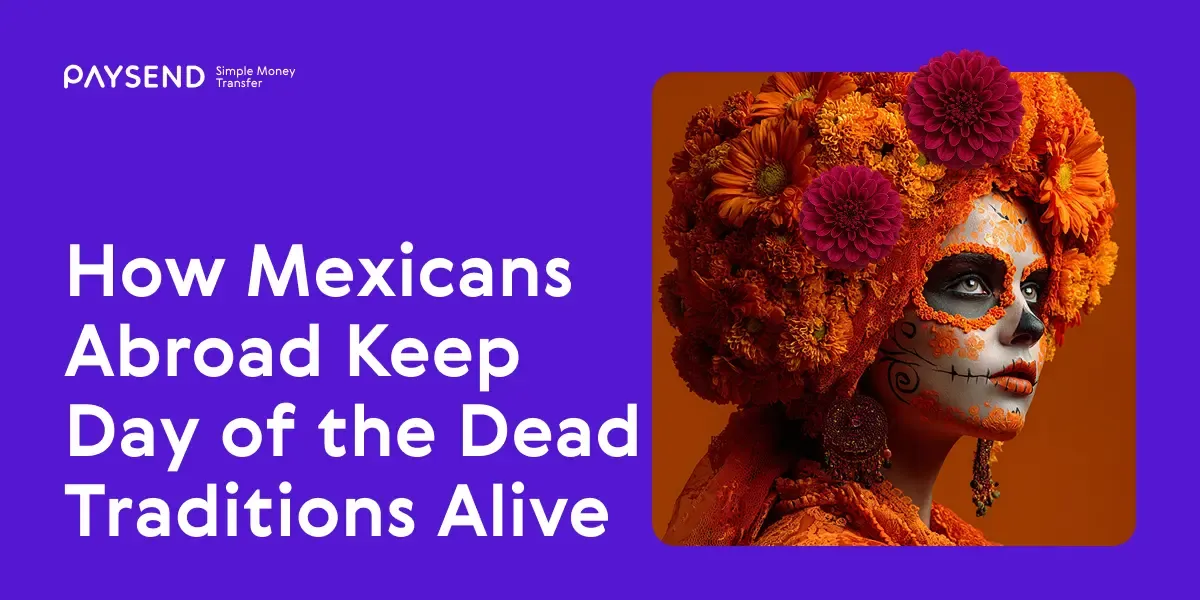
Every year from October 31 to November 2, families in Mexico and around the world celebrate Día de los Muertos (Day of the Dead) — a colorful tradition that honors loved ones who have passed away. For Mexicans abroad, keeping this tradition alive is a way to stay close to family and heritage, no matter the distance.
What is Day of the Dead?
Unlike Halloween, which focuses on spookiness and fright, Day of the Dead is a joyful celebration of life and memory. Families welcome the spirits of loved ones with food, music, and colorful displays.
A brief history of Día de los Muertos
The holiday blends Aztec rituals with Catholic traditions from All Saints’ and All Souls’ Days. Over time, it has become one of Mexico’s most cherished cultural celebrations, recognized by UNESCO as part of humanity’s intangible cultural heritage.
How is Day of the Dead celebrated?
- Ofrendas (altars) — Families build altars decorated with photos, candles, marigolds, and food.
- Traditional foods — Pan de muerto (bread of the dead), sugar skulls, and tamales.
- Parades and music — Streets come alive with costumes, music, and dancing.
- Family gatherings — Sharing meals, stories, and time together.
How Mexicans abroad celebrate
From Los Angeles to Madrid, Mexicans abroad build ofrendas in their homes, host community events, and attend cultural festivals. Many also send money home to help families prepare for the festivities, buy food, and decorate altars.
Staying connected: Send money to Mexico, simply and securely
Whether you’re supporting family celebrations, contributing to an altar, or just sending a gift of love, Paysend makes it fast and easy to transfer money directly to bank accounts, cards, or wallets in Mexico. With no hidden fees, you can be sure your support goes further this Día de los Muertos.
Celebrating life, honoring memory
Day of the Dead is proof that love lives on across generations and borders. This year, if you’re sending support home, make it simple and secure with Paysend.
Neueste Beiträge

Jeden Monat schicken Tausende Menschen, die in Tschechien arbeiten, einen Teil ihres Gehalts nach Hause – viele von ihnen sind Ukrainer, die Familie jenseits der Grenze unterstützen. Und der klassische Weg macht es schwerer, als es sein müsste: Banküberweisungen, die IBAN und SWIFT-Codes verlangen, Gebühren, die erst sichtbar werden, wenn das Geld schon weg ist, und tagelanges Warten, während zu Hause jemand darauf angewiesen ist.
Pavel Štich hilft seinen Lesern seit Jahren genau dabei, dieses Problem zu lösen. Er ist Mitgründer und Chefredakteur für Finanzen bei Moneyo.cz, einer unabhängigen tschechischen Plattform, die Geldtransferdienste, Aktienbroker und alternative Investments vergleicht – und Paysend-Botschafter, was bedeutet: Er testet selbst, was er empfiehlt, erklärt es verständlich und bietet seinen Lesern exklusive Vorteile. Wir haben ihn gefragt, wie Moneyo entstanden ist, wer die Plattform liest und warum er sich für Paysend entschieden hat.

Sending money digitally is quick and convenient, but it also involves important security, verification, and fraud prevention checks. In most cases these checks happen automatically in the background.
If you’ve ever wondered why Paysend asks you to verify your identity, why a transfer might be reviewed, or how your money is protected, the answer is simple: these processes are designed to keep you, your money, and your recipient safe.
Every digital money transfer relies on trust, regulation, and security systems working together. While these checks can sometimes feel like an extra step, they are a standard and essential part of how modern money transfers stay secure.


