Paysend white paper - Digital money transfers and the empowerment of women

All over the world, gender inequality makes it difficult for women to enjoy the same level of financial independence and inclusion as their male counterparts.
This is most evident in low-income countries, where financial infrastructure, socio-economic situations and prejudiced behavioural attitudes prevent women from taking control of their own financial destiny. Digital money services - particularly digital money transfers - are a way to change this.
Our white paper, entitled Digital money for inclusion. How FinTech is supporting the empowerment of women, explores the importance of digitisation of money transfers in creating a more inclusive financial world for women. By extensively using data from the World Bank and a number of other sources, the white paper aims to connect the dots between financial exclusion, digital money and gender equality.
You can download the white paper below:
Neueste Beiträge

Sending money abroad shouldn't mean queuing in a bank branch and filling out forms with codes you may never have heard of. An international money transfer moves your money from your account, card, or wallet in the US to someone else's account, card, or wallet in another country, and, above all, it should be simple, transparent, and reliable enough that you don't have to think twice about it.
Whether you're supporting family back home, paying for something abroad, or sending a gift for a birthday you can't be there for in person, the reason you're sending matters more than the mechanics. If you're new to Paysend, your first transfer comes with zero fee and a special exchange rate, so more of what you send actually arrives, and we'll show you how to claim it.
Jeden Monat schicken Tausende Menschen, die in Tschechien arbeiten, einen Teil ihres Gehalts nach Hause – viele von ihnen sind Ukrainer, die Familie jenseits der Grenze unterstützen. Und der klassische Weg macht es schwerer, als es sein müsste: Banküberweisungen, die IBAN und SWIFT-Codes verlangen, Gebühren, die erst sichtbar werden, wenn das Geld schon weg ist, und tagelanges Warten, während zu Hause jemand darauf angewiesen ist.
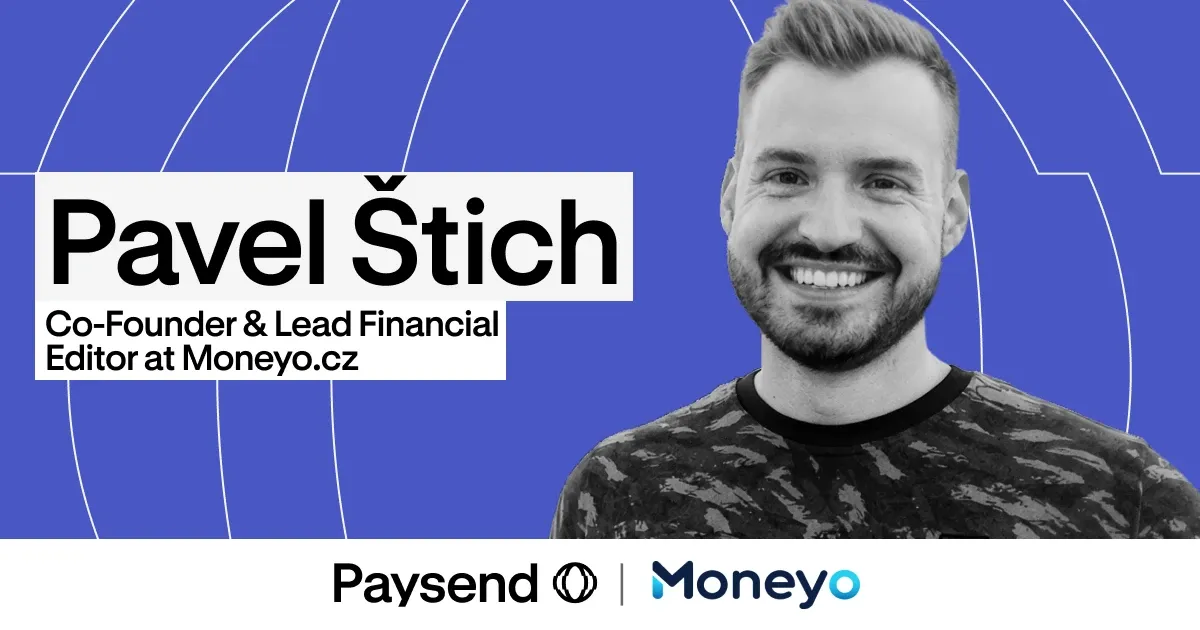
Pavel Štich hilft seinen Lesern seit Jahren genau dabei, dieses Problem zu lösen. Er ist Mitgründer und Chefredakteur für Finanzen bei Moneyo.cz, einer unabhängigen tschechischen Plattform, die Geldtransferdienste, Aktienbroker und alternative Investments vergleicht – und Paysend-Botschafter, was bedeutet: Er testet selbst, was er empfiehlt, erklärt es verständlich und bietet seinen Lesern exklusive Vorteile. Wir haben ihn gefragt, wie Moneyo entstanden ist, wer die Plattform liest und warum er sich für Paysend entschieden hat.


