24 Days of Christmas Giveaway – Win up to $1,000 this December!
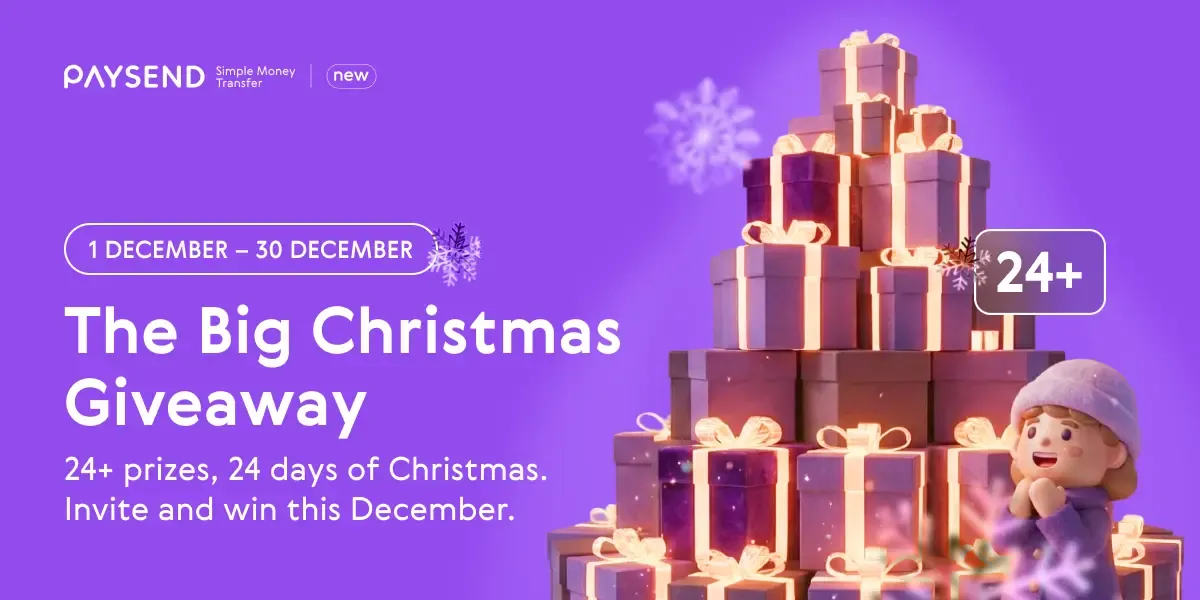
The festive season is all about generosity, connection, and giving back – and this year, Paysend is spreading the joy with 24 days of growing prizes for our community across the Europe and the UK.
From December 1st to 24th, each successful referral – when your friend signs up – gives you an entry into our daily draw.
Each day, one lucky customer wins a cash reward, starting at $100 and increasing daily up to $1,000 on Christmas Eve.
How It Works
1. Invite friends and family to Paysend using your referral link.
2. Each friend who signs up gives you one entry.
3. A new winner is selected every day between 1 and 24 December.
4. Prizes increase daily, from $100 to $1,000.
Daily Prize Schedule
| Date | Prize (USD) | Date | Prize (USD) |
| Dec 1 | $100 | Dec 13 | $700 |
| Dec 2 | $150 | Dec 14 | $725 |
| Dec 3 | $200 | Dec 15 | $750 |
| Dec 4 | $250 | Dec 16 | $800 |
| Dec 5 | $300 | Dec 17 | $825 |
| Dec 6 | $350 | Dec 18 | $850 |
| Dec 7 | $400 | Dec 19 | $875 |
| Dec 8 | $450 | Dec 20 | $900 |
| Dec 9 | $500 | Dec 21 | $925 |
| Dec 10 | $550 | Dec 22 | $950 |
| Dec 11 | $600 | Dec 23 | $950 |
| Dec 12 | $650 | Dec 24 | $1,000 (Grand Prize) |
Prizes displayed in USD for consistency but paid in your local currency equivalent.
Bonus Giveaway: The Super Sharer Draw
If you invite three or more friends, you’ll enter an additional draw for 24 extra $100 prizes — exclusively for our most active inviters.
It’s our way of saying thank you for sharing Paysend, helping others send money home, and making the festive season brighter for loved ones around the world.
When Are Winners Announced?
Winners are drawn and contacted daily and announced weekly via blog post and social media.
The final week’s winners (including the 3 Super Sharer winners) will be contacted and announced the week after Christmas.
Why We’re Doing It
At Paysend, we believe money transfers aren’t just about sending funds — they’re about sending care, support, and connection.
This festive season, every invite brings people closer and gives you a chance to win along the way.
Open to residents of EEA (excluding Poland) and UK, aged 18+. Runs from 1st Dec 2025 to 24th Dec 2025. To be automatically entered: take part in the Paysend “Refer a Friend” program and refer friends and family to use Paysend. Each successful referral constitutes 1 entry. Multiple entries allowed. Prizes: There will be a total of 48 Prizes available to be won during the Promotion Period. Full T&Cs apply, visit https://paysend.com/marketing-tc. Promoter: Paysend Group Limited.
Latest Posts

Back-to-school season can be one of the times of year you feel furthest from the people you love. It's also one of the most expensive – school supplies, uniforms, tuition, and everyday essentials all add up at once. Many people help cover these costs by sending money internationally to family abroad. To support that, new Paysend customers get a fee-free first transfer at a better exchange rate during the back-to-school period.
Whether you're helping pay for school or everyday expenses, an international transfer can get support to the people who need it, when they need it. Paysend lets customers send money to more than 170 countries through secure, straightforward payment methods — here's how to sign up for free and claim the offer.
Every month, thousands of people working in the Czech Republic send part of their payday home — many of them Ukrainians supporting family across the border. And the traditional route makes it harder than it should be: bank wires that ask for IBANs and SWIFT codes, fees that only show up after the money's gone, and days of waiting while someone at home is counting on it.
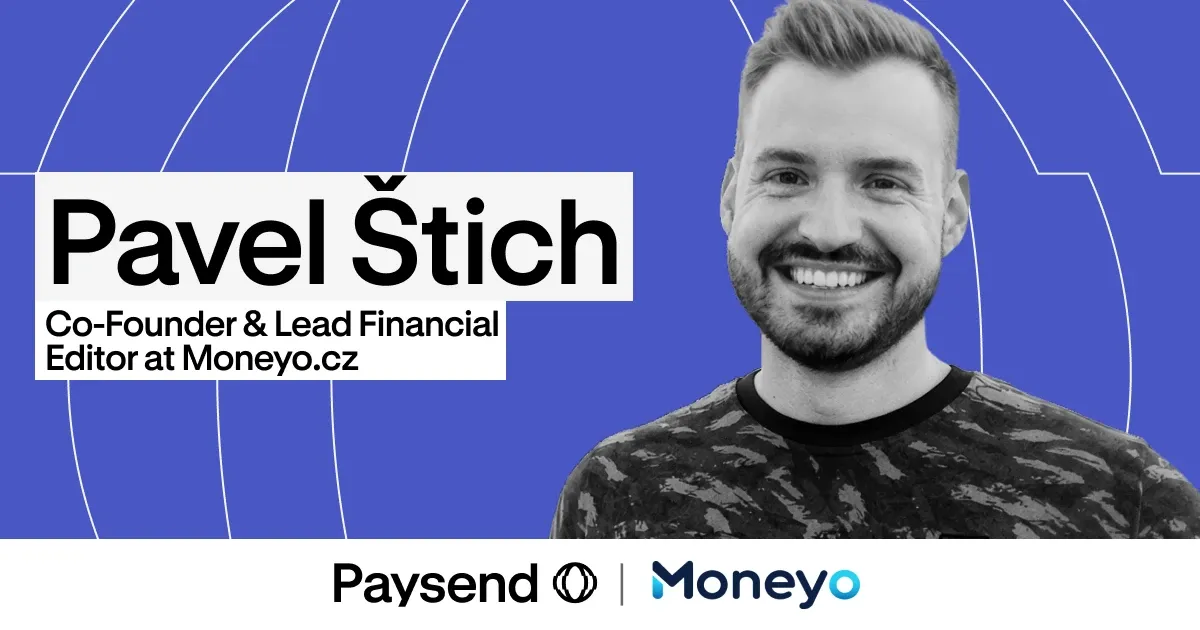
Pavel Štich has spent years helping his readers solve exactly that. He's Co-Founder and Lead Financial Editor at Moneyo.cz, an independent Czech platform that compares money transfer services, stock brokers, and alternative investments — and a Paysend Ambassador, which means he tests what he recommends, explains it plainly, and brings his readers reader-only perks. We asked him how Moneyo started, who reads it, and why he chose Paysend.


