Turning remittances into rewards: How the Paysend x JetBlue partnership helps connect communities
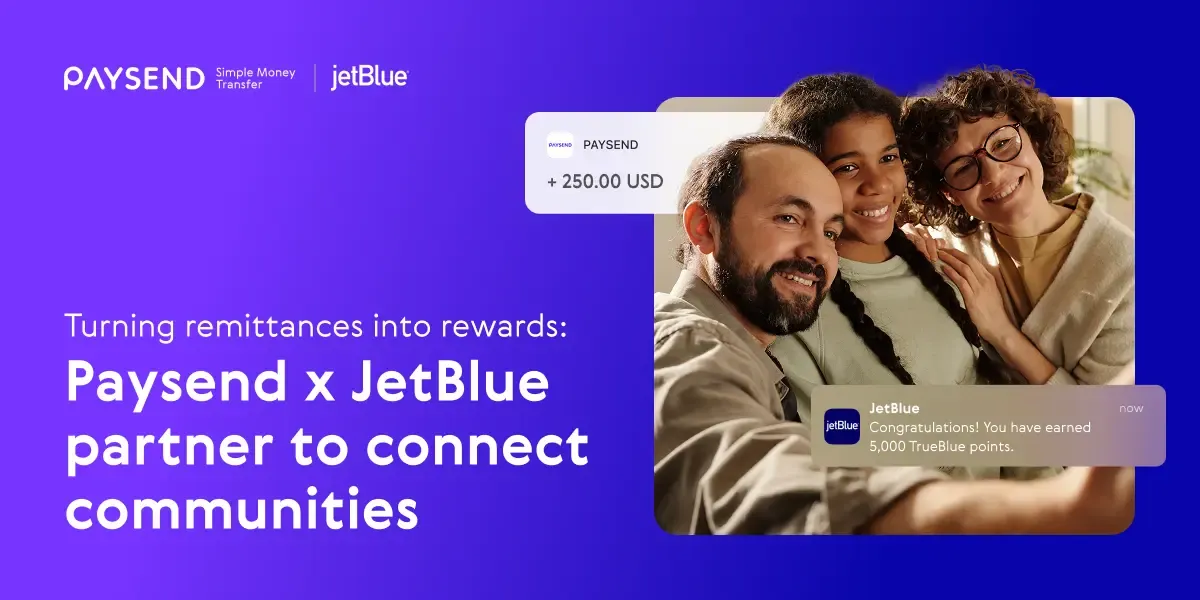
For millions of families across Latin America and the Caribbean, sending money home isn’t just about finances, it’s about connection. It’s how parents support children’s education, how siblings help one another through milestones, and how entire communities stay linked across borders.
At Paysend, we understand that these everyday remittances carry deep emotional and cultural meaning. That’s why our new partnership with JetBlue feels so special. Together, we’re connecting financial and travel experiences, giving customers the chance to earn TrueBlue points when they send money home to the Dominican Republic.
Now through March 30, 2026, customers in the United States who send a transfer of $100 or more to the Dominican Republic with Paysend will receive 5,000 TrueBlue points.* It’s a simple way to turn everyday remittances into travel rewards, helping families get one step closer to reuniting in person.
*For U.S. residents only. USD → USD transfers excluded. Offer valid through March 30, 2026. Limited to one (1) award of 5,000 TrueBlue points per customer. Paysend reserves the right to modify or cancel the promotion at any time. Third-party fees may apply. FX rates are determined by Paysend and may include a margin. Terms and conditions apply.
Building bridges across borders
For the Dominican diaspora, sending money home is more than an act of care, it’s a lifeline. Every year, Dominicans abroad send over $10 billion in remittances, the majority coming from the U.S. These transfers fund education, healthcare, and small businesses, and they fuel a vital flow of prosperity and support between the two countries.
This partnership was born from a shared vision, to make digital connection more meaningful. Together with JetBlue, we wanted to do more than move money; we wanted to move people. JetBlue’s deep ties to the Caribbean and our mission to build the world’s largest digital payment network made this collaboration a natural fit. We’re both focused on helping people stay connected – financially, emotionally, and now, through the power of travel rewards.
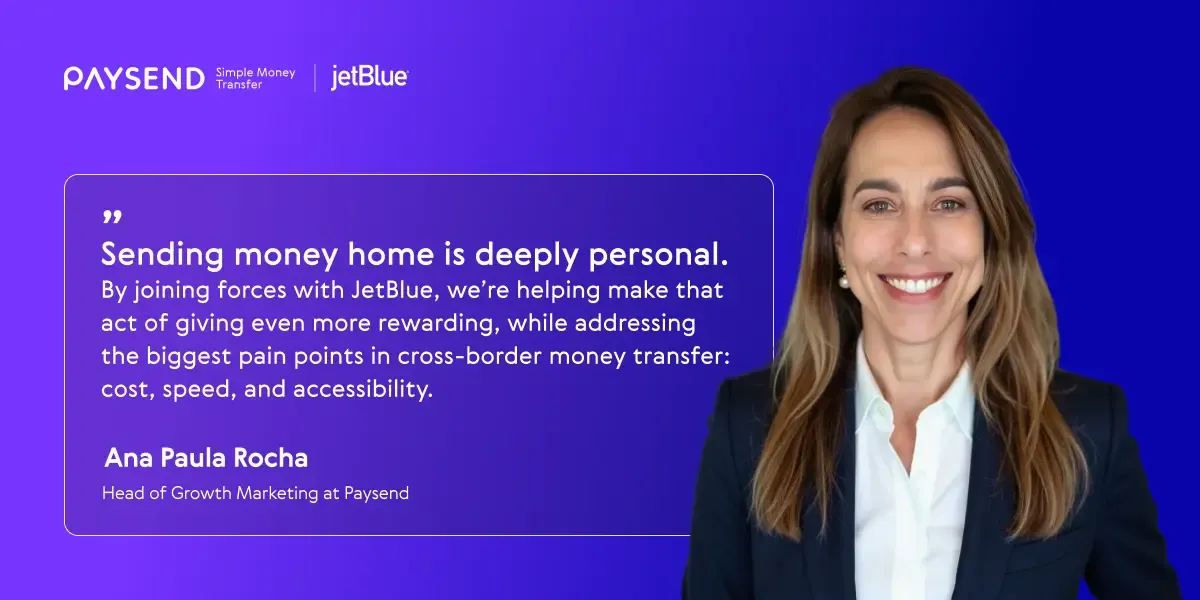
“We know that for our customers, sending money home is deeply personal,” says Ana Paula Maciel, Head of Partnerships at Paysend. “By joining forces with JetBlue, we’re helping make that act of giving even more rewarding, while addressing the biggest pain points in cross-border money transfer: cost, speed, and accessibility.”
Inside the partnership: how Paysend and JetBlue came together
To explore how this partnership came together, and why it matters to the Dominican community, we sat down with Ana Paula Maciel from Paysend and Lucia Bastidas, Manager, Loyalty Program at at JetBlue.
Ana Paula (Paysend): Lucia, JetBlue has such deep roots in the Dominican community. What inspired JetBlue to connect travel with remittances through this partnership?
Lucia (JetBlue): For many people, remittances are how they stay close to loved ones between visits. By partnering with Paysend, we wanted to give something back – a way for customers to earn TrueBlue points that bring them closer to their next trip home.
Ana Paula (Paysend): That’s exactly what inspired us too – turning something essential into something aspirational. At Paysend, we’re on a mission to make global money transfers simple, secure, and accessible to everyone, including underserved communities. We’re proud to work with a partner who shares that belief in breaking barriers and building opportunity.
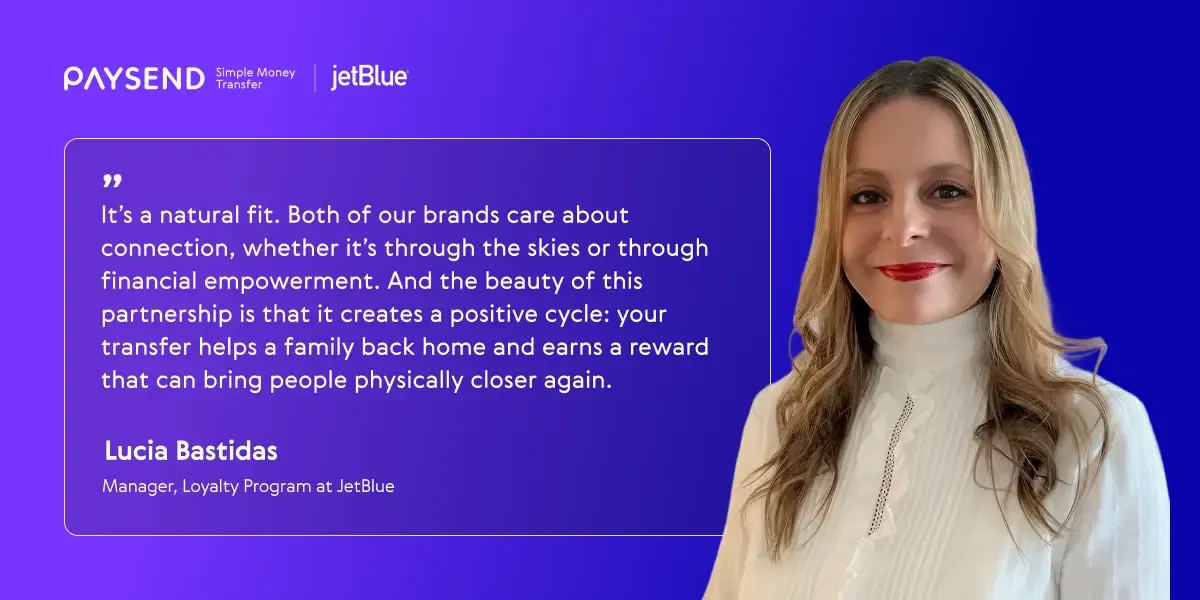
Lucia (JetBlue): It’s a natural fit. Both of our brands care about connection, whether it’s through the skies or through financial empowerment. And the beauty of this partnership is that it creates a positive cycle: your transfer helps a family back home and earns a reward that can bring people physically closer again.
Empowering the LATAM community
For many in the Latin American and Caribbean diaspora, the challenge of supporting loved ones from afar can feel complex, but Paysend is committed to making it easier. Through our mission to bring Simple Money Transfer to all and grow the world’s largest digital payments network, we’re simplifying the way money moves across borders while keeping costs predictable and transparent.
Together with JetBlue, we’re celebrating a community that never stops giving back, and ensuring that your transfer carries even more value.
Send money, earn travel
Today through March 30, 2025, customers sending $100 or more from the U.S. to the Dominican Republic via Paysend will earn 5,000 TrueBlue points.
It’s fast, secure, and rewarding, just like it should be.
To get started, visit paysend.com/trueblue and make your first transfer today. Because every transfer home deserves to go further.
Últimos artículos

La vuelta al cole es una de esas épocas del año en las que más se siente la distancia de los seres queridos. También es una de las más costosas: material escolar, uniformes, matrículas y gastos cotidianos suelen concentrarse en unas pocas semanas. Muchas personas ayudan a sus familiares en el extranjero a cubrir estos gastos enviándoles dinero. Para ayudar con estos costes, los nuevos clientes de Paysend pueden hacer su primera transferencia sin comisiones y con un tipo de cambio más favorable durante el periodo de vuelta al cole.
Tanto si ayudas a pagar los estudios como si necesitas cubrir gastos del día a día, una transferencia internacional te permite apoyar a tus seres queridos justo cuando más lo necesitan. Con Paysend puedes enviar dinero a más de 170 países mediante métodos de pago seguros y cómodos. A continuación, te explicamos cómo registrarte gratis y aprovechar la oferta.

Cada mes, miles de personas que trabajan en la República Checa envían parte de su sueldo a casa; muchos de ellos son ucranianos que apoyan a sus familias en Ucrania. Y el método tradicional complica lo que debería ser sencillo: transferencias bancarias que requieren IBAN y códigos SWIFT, comisiones cuyo importe solo se conoce después de enviar el dinero y días de espera mientras sus familias cuentan con ese dinero.
Pavel Štich lleva años ayudando a sus lectores a resolver justamente ese problema. Es cofundador y redactor jefe de la sección de finanzas de Moneyo.cz, una plataforma checa independiente que compara servicios de transferencia de dinero, brókeres bursátiles e inversiones alternativas, y Embajador de Paysend. Esto significa que prueba personalmente todo lo que recomienda, lo explica con claridad y ofrece a sus lectores ventajas exclusivas. Le preguntamos cómo empezó Moneyo, quiénes lo leen y por qué eligió Paysend.


