How Mexicans Abroad Keep Day of the Dead Traditions Alive
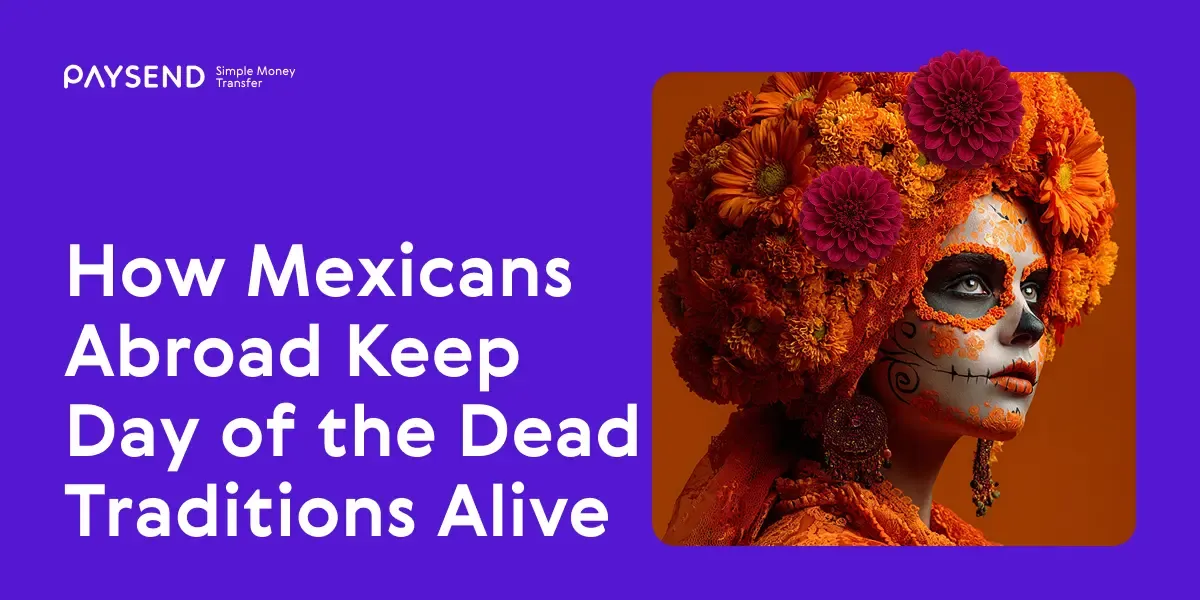
Every year from October 31 to November 2, families in Mexico and around the world celebrate Día de los Muertos (Day of the Dead) — a colorful tradition that honors loved ones who have passed away. For Mexicans abroad, keeping this tradition alive is a way to stay close to family and heritage, no matter the distance.
What is Day of the Dead?
Unlike Halloween, which focuses on spookiness and fright, Day of the Dead is a joyful celebration of life and memory. Families welcome the spirits of loved ones with food, music, and colorful displays.
A brief history of Día de los Muertos
The holiday blends Aztec rituals with Catholic traditions from All Saints’ and All Souls’ Days. Over time, it has become one of Mexico’s most cherished cultural celebrations, recognized by UNESCO as part of humanity’s intangible cultural heritage.
How is Day of the Dead celebrated?
- Ofrendas (altars) — Families build altars decorated with photos, candles, marigolds, and food.
- Traditional foods — Pan de muerto (bread of the dead), sugar skulls, and tamales.
- Parades and music — Streets come alive with costumes, music, and dancing.
- Family gatherings — Sharing meals, stories, and time together.
How Mexicans abroad celebrate
From Los Angeles to Madrid, Mexicans abroad build ofrendas in their homes, host community events, and attend cultural festivals. Many also send money home to help families prepare for the festivities, buy food, and decorate altars.
Staying connected: Send money to Mexico, simply and securely
Whether you’re supporting family celebrations, contributing to an altar, or just sending a gift of love, Paysend makes it fast and easy to transfer money directly to bank accounts, cards, or wallets in Mexico. With no hidden fees, you can be sure your support goes further this Día de los Muertos.
Celebrating life, honoring memory
Day of the Dead is proof that love lives on across generations and borders. This year, if you’re sending support home, make it simple and secure with Paysend.
Últimos artículos
If you're working in one country and supporting family in another, you already know the drill. Payday lands, and the money needs to be with them – not in three working days, not after a bank somewhere in the middle has taken its turn with it. Today, in their hands, ready to spend.
Here's the good news: a card to card transfer sends money straight from your card to someone else's, using the card networks instead of a standard bank transfer. No IBAN, no BIC, no sort code – just a card number. Let's get you sending.
Buenas noticias: en septiembre, las recompensas se duplican. Durante todo septiembre de 2026, cada amigo que invites a Paysend te hará ganar $6 en lugar de los $3 habituales. Invita a varios y podrás ganar hasta $72 este mes, o el equivalente en tu moneda local.
Es el mismo programa de referidos que ya conoces. Simplemente, la recompensa es el doble hasta el 30 de septiembre. Así es como funciona y cómo sacarle el máximo partido.


