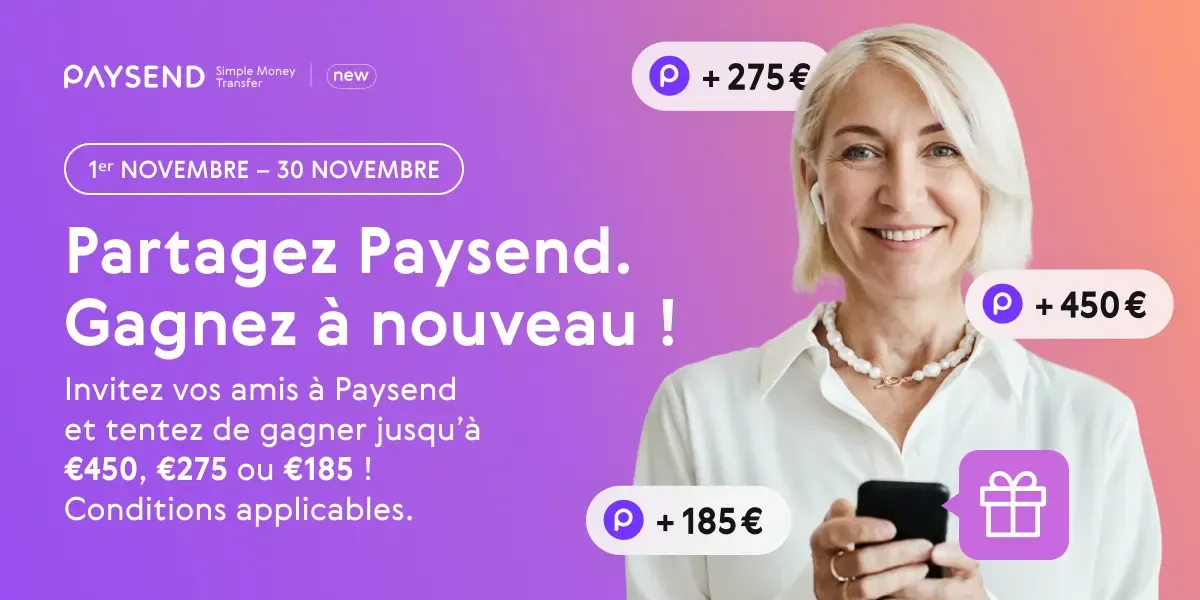
Votre seconde chance de gagner jusqu’à €450, €275 ou €185 avec Paysend !
Gardez un œil sur votre boîte mail et nos réseaux sociaux — nous annoncerons très bientôt les gagnants du mois d’octobre !
Pas de chance cette fois ? Ne vous inquiétez pas — vous avez une seconde chance !
Le concours Paysend continue tout au long du mois de novembre — profitez d’une nouvelle occasion de gagner jusqu’à €450, €275 ou €185 EUR (ou équivalent) en bonus Paysend.
Comment participer :
Du 1ᵉʳ au 30 novembre 2025, invitez vos amis et vos proches à rejoindre Paysend. Chaque invitation réussie — c’est-à-dire lorsqu’un ami effectue son premier transfert — vous donne une chance supplémentaire de gagner.
Les récompenses :
🥇 €450 EUR (ou équivalent dans votre devise locale)
🥈 €275 EUR (ou équivalent)
🥉 €185 EUR (ou équivalent)
Plus vous invitez d’amis, plus vous avez de chances de gagner.
Et même si vous ne remportez pas l’un des prix, vous continuez à profiter de notre programme de parrainage, qui vous rapporte €2.25 pour chacun des 12 premiers transferts de votre filleul (jusqu’à €27 au total).
Disclaimer :
Ouvert aux résidents de l’EEE et du Royaume-Uni âgés de 18 ans ou plus. Du 1ᵉʳ au 30 novembre 2025. Conditions complètes : https://paysend.com/marketing-tc Organisateur : Paysend Group Limited.
Derniers messages
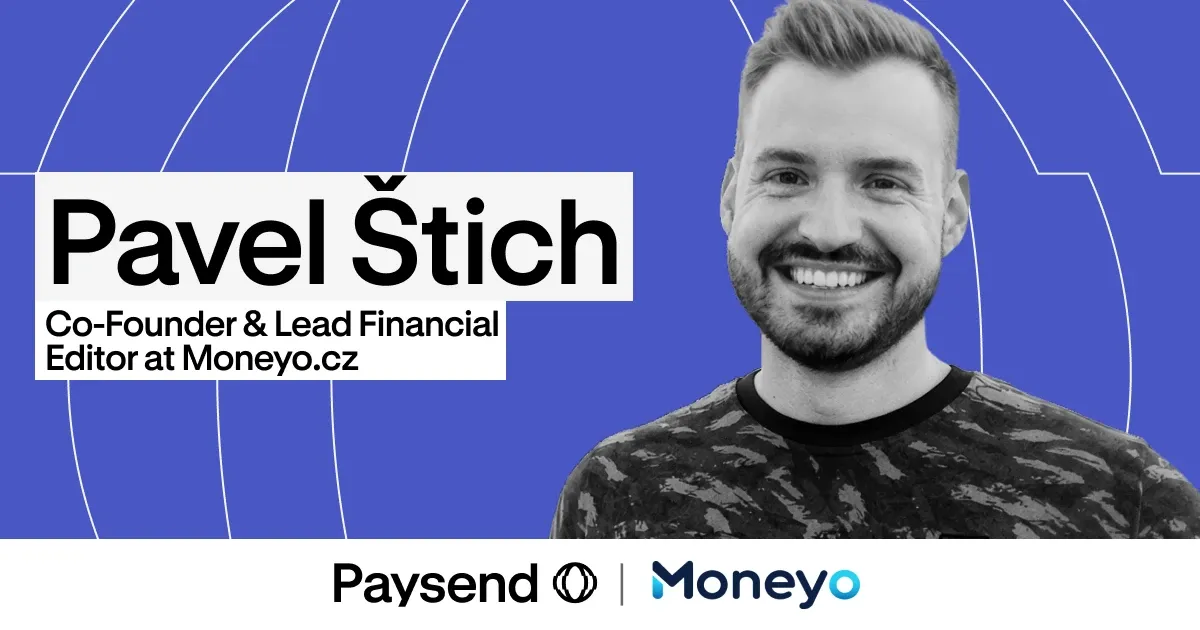
Chaque mois, des milliers de personnes travaillant en République tchèque envoient une partie de leur salaire chez elles — beaucoup sont des Ukrainiens qui soutiennent leur famille de l'autre côté de la frontière. Et la méthode traditionnelle complique ce qui devrait être simple : des virements bancaires qui exigent IBAN et codes SWIFT, des frais qui n'apparaissent qu'une fois l'argent parti, et des jours d'attente pendant que quelqu'un, chez soi, compte sur ce transfert.
Pavel Štich aide ses lecteurs à résoudre exactement ce problème depuis des années. Il est cofondateur et rédacteur en chef finance de Moneyo.cz, une plateforme tchèque indépendante qui compare les services de transfert d'argent, les courtiers en bourse et les investissements alternatifs — et Ambassadeur Paysend, ce qui signifie qu'il teste lui-même ce qu'il recommande, l'explique simplement, et fait bénéficier ses lecteurs d'avantages exclusifs. Nous lui avons demandé comment Moneyo a démarré, qui le lit, et pourquoi il a choisi Paysend.

Sending money digitally is quick and convenient, but it also involves important security, verification, and fraud prevention checks. In most cases these checks happen automatically in the background.
If you’ve ever wondered why Paysend asks you to verify your identity, why a transfer might be reviewed, or how your money is protected, the answer is simple: these processes are designed to keep you, your money, and your recipient safe.
Every digital money transfer relies on trust, regulation, and security systems working together. While these checks can sometimes feel like an extra step, they are a standard and essential part of how modern money transfers stay secure.


