International money transfer: zero fee and a special rate offer on your first transfer

Sending money abroad shouldn't mean queuing in a bank branch and filling out forms with codes you may never have heard of. An international money transfer moves your money from your account, card, or wallet in the US to someone else's account, card, or wallet in another country, and, above all, it should be simple, transparent, and reliable enough that you don't have to think twice about it.
Whether you're supporting family back home, paying for something abroad, or sending a gift for a birthday you can't be there for in person, the reason you're sending matters more than the mechanics. If you're new to Paysend, your first transfer comes with zero fee and a special exchange rate, so more of what you send actually arrives, and we'll show you how to claim it.
Is this a free money transfer?
As a new Paysend customer, we remove our transfer fee on your first send — it's fixed at $0.00. Third-party charges can still apply depending on your transfer method, and what we can promise is that you'll always see the fee and the exchange rate your recipient will get before you confirm and send your transfer. No surprises after the money's gone.
Here's what the offer includes:
- Zero transfer fee — a fixed fee of $0.00 on your first transfer
- Special exchange rate so your recipient gets more
- No promo code required — applied automatically
- Various payout methods supported — card, bank account, or digital wallet
Disclaimer: New customers only. Offer valid from April 02, 2026, through July 31, 2026. One-time offer for first transfer only. FX rates are determined by Paysend and may include a margin. Third-party charges may still apply. Terms and Conditions apply.
Sending an international money transfer online, made simple
An online international money transfer works differently to a traditional bank wire. Instead of routing your money through a chain of correspondent banks, services like Paysend send it directly* to your money receiver's bank account, card, or digital wallet using modern payment networks.
*Please note: While most transfers are now received within minutes, delivery times can still vary based on the recipient’s bank processing, compliance checks, or other local conditions.
That difference shows up in three places: speed, cost, and how much you need to know about your recipient's bank. You send from the Paysend app or website, choose a destination, and your money receiver gets the funds without needing a Paysend account of their own. You don't need to be a banking expert to use it, and you don't need your recipient to be one either.
If you've compared an online international wire transfer through a bank against an app-based transfer, you may have already noticed the gap — a wire can sometimes take days and come with bank fees and processing fees. Paysend is built to close that gap, so what you see when you send is what your recipient actually gets.
Sending money abroad from the US, step by step
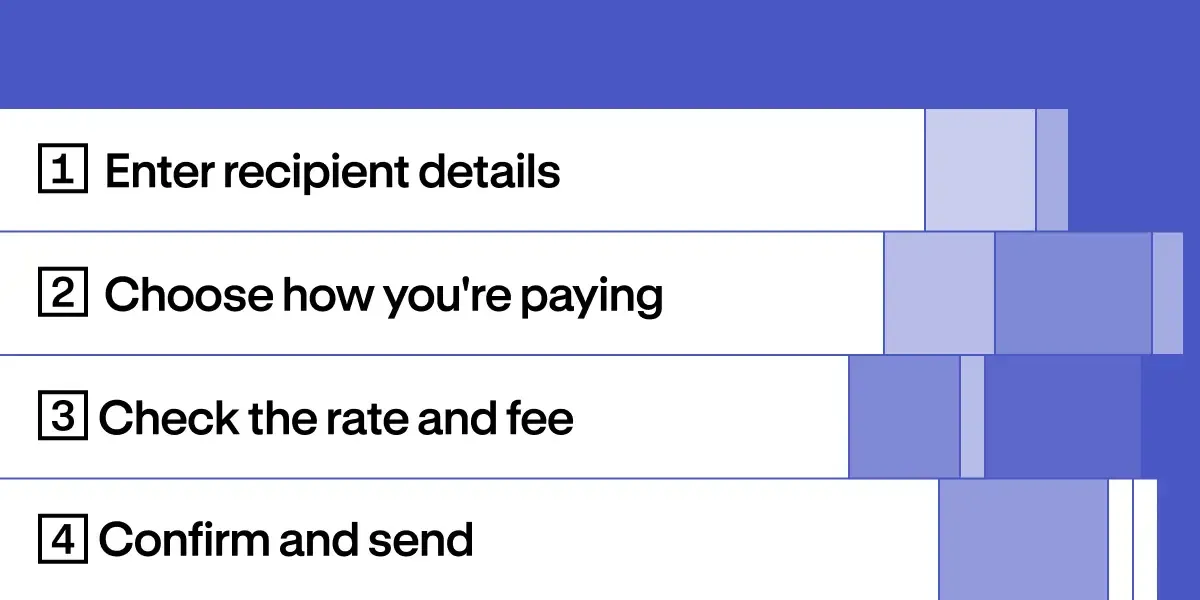
Making an international money transfer with Paysend takes a few minutes:
- Download the Paysend app or visit the Paysend website. Signing up costs nothing.
- Create a Paysend account.
- Select "Send money" and choose your destination country.
- Enter your recipient's details — their bank account or card.
- Enter the amount you want to send.
- Choose a payment method — bank account, debit or credit card, or a digital wallet.
- Review the exchange rate and fees. Your first transfer shows a $0.00 fee and a special rate automatically.
- Send. Your money receiver doesn't need a Paysend account to receive the money.
Exchange rates change throughout the day, so check the app for the live rate before you confirm. It only takes a second, and it means you'll always know exactly what your recipient is getting before you commit.
How international money transfers actually work
A money transfer takes your funds from a sending method — your bank account, debit or credit card, or digital wallet — and delivers them to your money receiver through their own bank account, card, or wallet. Card networks and digital payment rails carry your money between the two, converting it into your recipient's local currency along the way.
This matters because it's genuinely different from how a bank wire typically moves. A traditional wire can sometimes pass through several intermediary banks before it reaches its destination, and each one can take its own cut of time, and sometimes cost, along the way. Paysend's network is built to skip that chain, which is a big part of why transfers move as quickly as they do.
95% of Paysend transfers complete in seconds**. Delivery can still take up to three business days depending on your recipient's bank, so it's worth checking expected timing if your transfer is time-sensitive — sending rent money on the day it's due, for example, is exactly the kind of moment where a few minutes of checking beforehand saves you both some stress.
**Please note: While most transfers are now received within minutes, delivery times can still vary based on the recipient’s bank processing, compliance checks, or other local conditions.
Where you can send your international money transfer
Paysend's zero fee and special rate offer covers first transfers to 26 destination countries from the US: Brazil (BRL), Mexico (MXN), Colombia (COP), Jamaica (JMD), the Philippines (PHP), the Dominican Republic (DOP), Canada (CAD), Poland (PLN), China (CNY), Nigeria (NGN), Turkey (TRY), Ghana (GHS), India (INR), the United Kingdom (GBP), Kenya (KES), Chile (CLP), the Czech Republic (CZK), South Korea (KRW), Costa Rica (CRC), Honduras (HNL), Guatemala (GTQ), Romania (RON), Peru (PEN), Belize (BZD), Bangladesh (BDT), Argentina (ARS), and Paraguay (PYG).
Whichever country you're sending to, your money receiver gets paid out in their local currency, and you can choose from card, bank account, or wallet delivery depending on what's available there - you can check this in the Paysend app. That flexibility matters if your recipient doesn't have a traditional bank account, or simply prefers to receive money straight onto a card they already use every day.
Who sends international money transfers, and why
People send money abroad for all kinds of reasons, and most of them share one thing in common: it matters that the money arrives quickly, in full, and without a headache. Some send a portion of every paycheck home to support parents or siblings. Others are covering tuition or living costs for a family member studying overseas. Some are simply paying a friend back, or sending a gift for an occasion they can't attend in person.
Whatever the reason, the underlying need is the same — a transfer that's straightforward to set up, transparent about what it costs, and reliable enough that you don't have to think twice about whether it'll actually get there.
Paysend fees, cost, and how the pricing compares
If you've searched for money transfer prices before, you've probably seen how different providers explain their fees, and how easy it is to lose track of the real cost once an exchange rate margin is added on top. Paysend keeps this simple: you see the transfer fee and the exchange rate together, before you confirm anything, so there's no separate charge that shows up later.
A great way to transfer cash internationally usually comes down to two questions: what's the fee, what's the exchange rate. Paysend answers both upfront, on the same screen.
International money transfer services: bank vs Paysend
A traditional bank-to-bank international money transfer may go through a chain of correspondent banks. Each one may add time and its own charges, and the final amount your recipient sees may not be clear until the money's already arrived.
Some people compare providers directly — checking a transfer through their bank against an app-based service, or even comparing sending between their own accounts on various money transfer platforms. Paysend sends money directly through card networks and digital payment rails, skipping most of the correspondent banking chain. That's part of why 95% of Paysend transfers complete in seconds, against the days a bank wire can take. You also see the exchange rate and fee upfront, before you confirm anything — not buried in paperwork after the fact.
Why people choose Paysend for sending money internationally
A few things matter most when you're trusting a service with money that means something to someone:
- Transparent pricing. No hidden fees — you see the full cost before you send.
- Secure delivery. Protection and support on every transfer.
- A trusted network. Over 12 million users worldwide send through Paysend.
- A simple app. Built so sending money abroad doesn't feel like a chore.
Ready to get the offer and start sending money fast, reliably and securely?
FAQ
What is a money transfer?
A money transfer moves funds from a sender's account, card, or wallet to a money receiver's account, card, or wallet, often across countries and currencies. Paysend converts your money into your recipient's local currency automatically.
How do I make an international money transfer?
Download the Paysend app or visit the website, create an account, choose your destination, enter your recipient's details, and confirm the amount and payment method. Most transfers complete in minutes.
Is this a free money transfer?
We remove our transfer fee on your first transfer as a new customer, fixed at $0.00. Third-party charges can still apply depending on your transfer method. You'll always see the fee and exchange rate before you confirm and send.
How long does an international money transfer take?
95% of Paysend transfers complete in seconds. Delivery can take up to three business days depending on the recipient's bank.
Is there a fee for sending money abroad?
New customers get a $0.00 fee on their first transfer through July 31, 2026. Standard fees and exchange rate margins apply after that, and third-party charges may still apply.
Do I need a promo code for the offer?
No. The zero fee offer applies automatically when a new customer sends their first transfer — there's no code to enter.
Do I need a bank account to receive an international money transfer?
No. Your money receiver can receive money through a bank account, card, or digital wallet, and they don't need a Paysend account of their own.
Which countries can I send money to?
Paysend's new customer offer covers 26 countries, including Mexico, the Philippines, India, the United Kingdom, and Nigeria. Standard transfers cover more destinations outside the offer.
Ultimi post
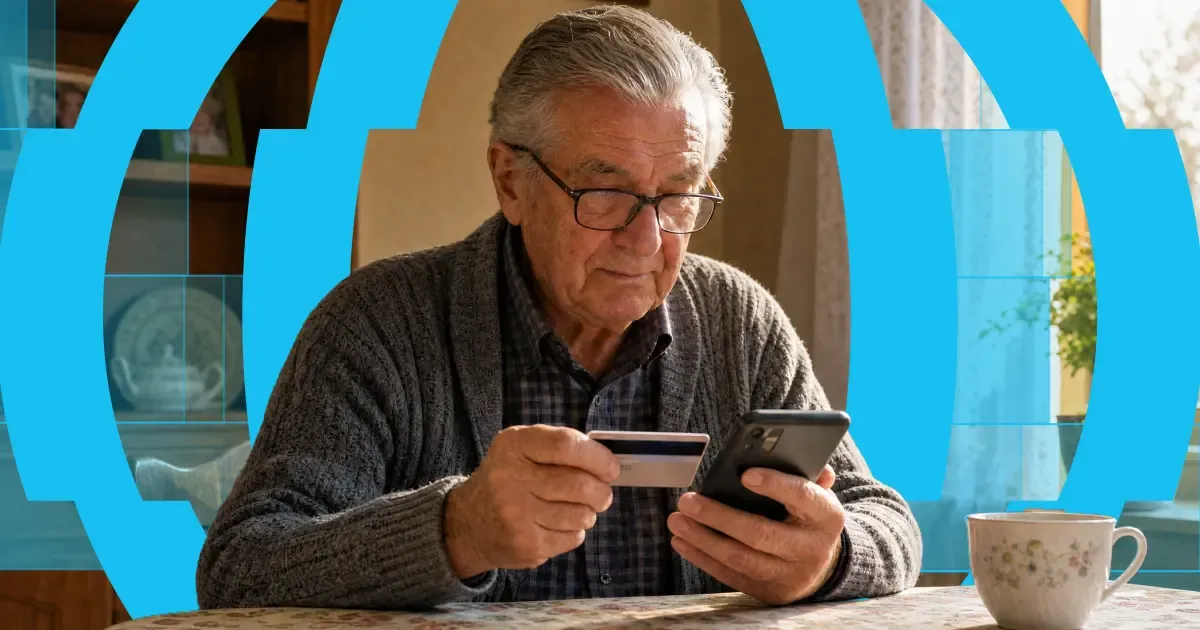
Here's the short answer: yes, you can use a credit card to get money into someone's bank account abroad. "Credit card to bank transfer" means exactly that — you fund the transfer with your credit card, and your recipient receives it in their bank account. Or on their card, in their wallet, or as cash to collect, depending on where they are.
The card and the bank account do different jobs. Your card pays for the transfer. A provider like Paysend then pays the money out through local systems on the other end. It's one flow, and it takes about a minute in the app.
One thing worth knowing before you start: a credit card is usually the most expensive way to fund a transfer. Some issuers treat it as a cash advance, and credit tends to carry higher payment fees than debit. You'll always see the full cost, exchange rate included, before you confirm anything. What follows is: the ways your money can arrive, what each one costs, how fast it gets there, and the cheaper routes worth checking first.

Il ritorno a scuola è uno di quei momenti dell'anno in cui si sente particolarmente la distanza dai propri cari. È anche uno dei periodi più costosi: materiale scolastico, uniformi, rette e spese quotidiane si concentrano spesso nello stesso periodo. Molte persone aiutano i propri familiari all'estero a coprire queste spese inviando loro del denaro. Per venire incontro a queste esigenze, i nuovi clienti Paysend possono effettuare il primo trasferimento senza commissioni e usufruire di un tasso di cambio più vantaggioso durante il periodo del ritorno a scuola.
Che si tratti di contribuire alle spese scolastiche o di aiutare a coprire le spese quotidiane, un trasferimento internazionale ti permette di sostenere i tuoi cari proprio quando ne hanno bisogno. Con Paysend puoi inviare denaro in oltre 170 Paesi utilizzando metodi di pagamento sicuri e convenienti. Ecco come registrarti gratuitamente e approfittare dell'offerta.


