Buying Property in Italy: 7 Essential Tips
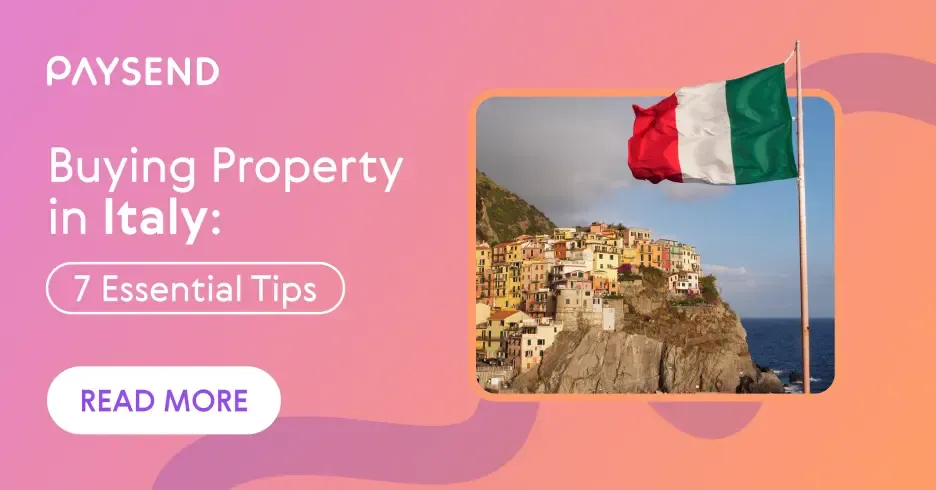
Dreaming of your own Italian villa with vineyard views? You’re not alone. From retirees seeking la dolce vita to investors expanding their portfolios, buying property in Italy is a popular move. But before you pack your bags for Tuscany, here are seven essential tips to help you buy with confidence.
1. Understand who can buy property in Italy
The good news is that Italy welcomes foreign buyers. EU citizens can buy without restrictions, while non-EU citizens (including Americans, Canadians, and Australians) can buy under the “reciprocity” principle – meaning your home country must allow Italians to buy property there. For Americans, Canadians, Brits, and many others, it’s perfectly legal to buy a home in Italy.
2. Choose the right region for your needs
Italy’s regions vary dramatically in price, lifestyle, and market trends. For example:
- Tuscany: Expensive but iconic, with high international demand.
- Puglia: More affordable, charming southern towns and seaside Trulli homes.
- Lombardy: Modern city living in Milan, with higher urban prices.
- Sicily & Calabria: Some of the lowest prices in Italy, ideal for renovation projects or budget-friendly coastal homes.
3. Set a realistic budget – factor in all costs
Beyond the purchase price, you’ll need to budget for:
- Real estate agent fees (typically 3-8% split between buyer and seller)
- Notary fees (approx. 2-4%)
- Legal fees (recommended for due diligence, €1,500-€3,000)
- Purchase taxes (varies if it’s a primary residence or second home; around 2% for residents, 9% for non-residents)
- Ongoing costs: IMU property tax, utilities, and maintenance.
4. Use a trusted bilingual real estate agent
Unless you’re fluent in Italian and local property law, work with a registered agent who speaks your language. They will help navigate bureaucracy, identify reliable listings, and avoid hidden issues. Always check their registration number to ensure legitimacy.
5. Conduct due diligence before you sign
Before signing a preliminary contract (Compromesso), ensure:
- The property is free of debts, mortgages, or legal disputes.
- Planning permissions and cadastral records match.
- The property meets earthquake and safety regulations (important in certain regions).
- Your lawyer or notary will conduct these checks for you.
6. Know the buying process timeline
Here’s what to expect:
- Make an offer (Proposta d’Acquisto) with a deposit.
- Sign the Compromesso (preliminary contract) with a 10-30% deposit.
- The notary finalises legal checks and tax registration.
- Sign the Rogito (final deed) before the notary, pay remaining balance, and receive your keys.
- The entire process takes 6-12 weeks on average.
7. Plan your international payments wisely
Your deposit and final payment will likely be in euros. Using traditional banks can mean high transfer fees and unfavourable exchange rates. Services like Paysend let you send money internationally to Italian bank accounts quickly, securely, and with competitive exchange rates – saving you money when it matters most.
Buying property in Italy is a dream within reach when you plan wisely. From charming coastal apartments to historic farmhouses, Italy has something for every buyer. Do your research, build your local team, and prepare your finances for a smooth process.
Ready to send money for your Italian property purchase?
Paysend offers fast, secure international transfers to Italy with clear rates and no hidden fees. Your dream home is closer than you think.
The educational materials on this site are provided for informational purposes only and do not reflect the opinions of Central Bank of Kansas City, Member FDIC. Educational materials may contain links to content on third-party websites which are provided for your convenience; please note that linked sites may have a privacy and security policy different from our own, and we cannot attest to the accuracy of information. The Central Bank of Kansas City does not guarantee nor expressly endorse any particular business, product, service, or third-party content.
Najnowsze posty

Początek roku szkolnego to jeden z tych momentów, kiedy szczególnie odczuwamy odległość od bliskich. To także jeden z najbardziej kosztownych okresów w roku: przybory szkolne, mundurki, czesne i codzienne wydatki trzeba często pokryć mniej więcej w tym samym czasie. Wiele osób pomaga rodzinie za granicą pokryć te koszty, wysyłając pieniądze. Aby pomóc w takich wydatkach, nowi klienci Paysend mogą wykonać pierwszy przelew bez opłat i po korzystniejszym kursie wymiany w okresie rozpoczęcia roku szkolnego.
Niezależnie od tego, czy pomagasz opłacić naukę, czy pokryć codzienne wydatki, przelew międzynarodowy pozwala wesprzeć bliskich dokładnie wtedy, gdy jest to najbardziej potrzebne. Z Paysend możesz wysyłać pieniądze do ponad 170 krajów za pomocą wygodnych metod płatności — poniżej dowiesz się, jak bezpłatnie się zarejestrować i skorzystać z oferty.

Co miesiąc tysiące osób pracujących w Czechach wysyła część wypłaty do domu — wielu z nich to Ukraińcy wspierający rodzinę za granicą. A tradycyjna droga utrudnia to, co powinno być proste: przelewy bankowe wymagające IBAN i kodów SWIFT, opłaty, które widać dopiero, gdy pieniądze już zniknęły, oraz dni oczekiwania, podczas gdy ktoś w domu na nie liczy.
Pavel Štich od lat pomaga swoim czytelnikom rozwiązywać dokładnie ten problem. Jest współzałożycielem i redaktorem naczelnym ds. finansów w Moneyo.cz — niezależnej czeskiej platformie, która porównuje usługi przekazów pieniężnych, brokerów giełdowych i alternatywne inwestycje — a także Ambasadorem Paysend, co oznacza, że osobiście testuje wszystko, co poleca, wyjaśnia to prostym językiem i daje swoim czytelnikom ekskluzywne korzyści. Zapytaliśmy go, jak powstało Moneyo, kto je czyta i dlaczego wybrał Paysend.


