A brief history of the British pound

The Pound Sterling is the national currency of the Isle of Man, the United Kingdom, South Sandwich Islands, Gibraltar, South Georgia, and the British Antarctic Territory.
It is the oldest currency still in constant use! Known as the sterling or pound and abbreviated as GBP. It is the fourth most commonly exchanged currency on the forex market!
The Bank of England issues the pound sterling, prints its banknotes, and supplies them to private banks across the United Kingdom.
The four current notes in circulation are the £5, £10, £20, and £50. Coins come in £1, £2, 50p, 20p, 10p, 5p and 1p.
Current banknotes
Today, the four denominations of banknotes in circulation are produced and printed on polymer, with £20 & £50 notes also manufactured on paper.
On all polymer notes, there is a large see-through window with a portrait of the Queen. The note's numerical value and the words the “Bank of England” are printed twice around the edge of this window.
A metallic image sits above this window. The foil is gold on the front of the £5 and £10 notes whilst the £20 note is gold and blue and gold and green on the £50 note.
On all of the British pound notes is a picture of the Queen. On the other side of the £5 is Winston Churchill, the £10 showing Jane Austen.
The 20-pound note in polymer shows JMW Turner, whereas the paper version observes Adam Smith.
Finally, the £50 polymer note features a picture of Alan Turing, on the paper version Matthew Boulton and James Watt.
History of the Pound Sterling
The name of the pound comes from the Latin word libra, which refers to its balance and weight.
The Bank of England first issued pound banknotes more than 300 years ago and have undergone several changes over the years.
The pound coin first appeared in 1489, during the reign of Henry VII. Pound notes started to circulate in England in 1694.
The United Kingdom allowed the British pound to float freely in 1971, among other currencies. This decision enabled market factors to decide its value. The currency sign for the pound was created with a single cross-bar (£), as seen on modern banknotes since 1975.
A variation with a double cross-bar (₤) has been used intermittently with £ since the earliest banknotes of 1725.
In place of the pound sign, an “L” was employed in newspapers, books and letters. This symbol derives from medieval Latin documents, the black letter “L”, an abbreviation for libra, the basic Roman unit of weight. It became an English unit of weight, defined as the tower pound of sterling silver.
In the British pre-decimal (duodecimal) currency system, the term £sd (or Lsd) for pounds, shillings and pence referred to the Roman words libra, solidus, and denarius.
The UK considered attaching the value of the British pound to the Deutsche mark in 1990 but soon afterwards discarded that notion.
In 2002, after the euro became the shared currency of most member states of the European Union. The United Kingdom opted not to follow it. The UK retained GBP as its national currency.
Support your loved ones by sending money to the United Kingdom!
Send funds for lower fees at quicker speeds to the United Kingdom today by visiting the Paysend website or downloading the app!
Wondering how much your recipient will receive? Check exchange rates before sending money to the United Kingdom!
Paysend provides up to date exchange rates, giving you transparency and helping you to benefit from no hidden fees. Visit our online money transfer platform or mobile app to find out just how much your recipient will receive in GBP using our currency conversion tool!
Najnowsze posty
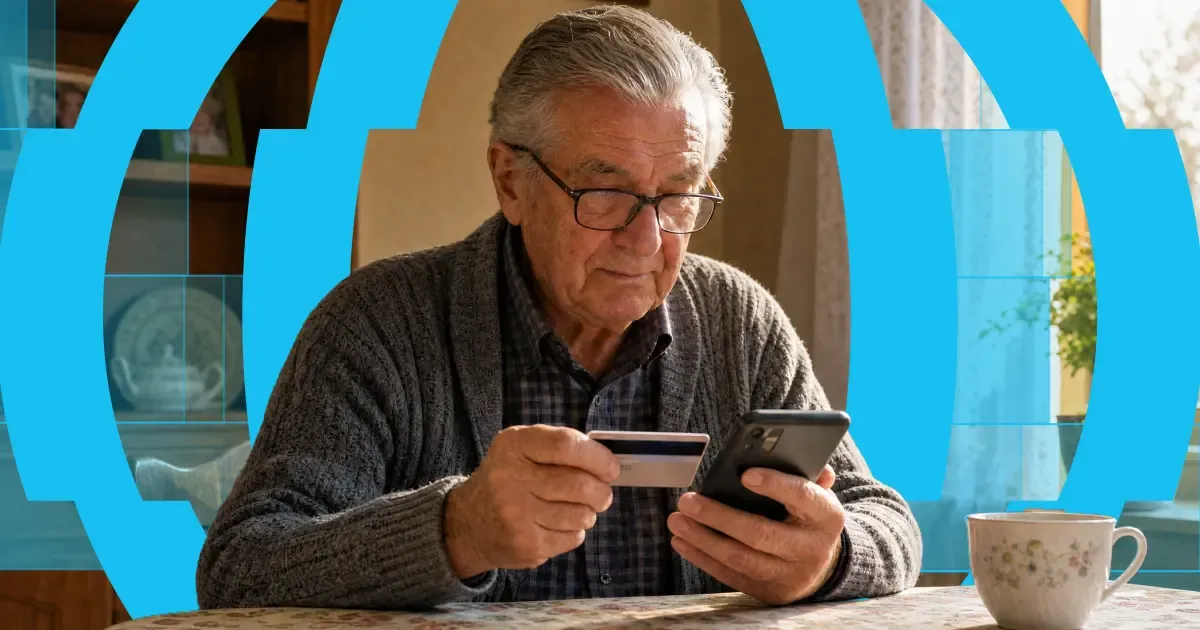
Here's the short answer: yes, you can use a credit card to get money into someone's bank account abroad. "Credit card to bank transfer" means exactly that — you fund the transfer with your credit card, and your recipient receives it in their bank account. Or on their card, in their wallet, or as cash to collect, depending on where they are.
The card and the bank account do different jobs. Your card pays for the transfer. A provider like Paysend then pays the money out through local systems on the other end. It's one flow, and it takes about a minute in the app.
One thing worth knowing before you start: a credit card is usually the most expensive way to fund a transfer. Some issuers treat it as a cash advance, and credit tends to carry higher payment fees than debit. You'll always see the full cost, exchange rate included, before you confirm anything. What follows is: the ways your money can arrive, what each one costs, how fast it gets there, and the cheaper routes worth checking first.

Co miesiąc tysiące osób pracujących w Czechach wysyła część wypłaty do domu — wielu z nich to Ukraińcy wspierający rodzinę za granicą. A tradycyjna droga utrudnia to, co powinno być proste: przelewy bankowe wymagające IBAN i kodów SWIFT, opłaty, które widać dopiero, gdy pieniądze już zniknęły, oraz dni oczekiwania, podczas gdy ktoś w domu na nie liczy.
Pavel Štich od lat pomaga swoim czytelnikom rozwiązywać dokładnie ten problem. Jest współzałożycielem i redaktorem naczelnym ds. finansów w Moneyo.cz — niezależnej czeskiej platformie, która porównuje usługi przekazów pieniężnych, brokerów giełdowych i alternatywne inwestycje — a także Ambasadorem Paysend, co oznacza, że osobiście testuje wszystko, co poleca, wyjaśnia to prostym językiem i daje swoim czytelnikom ekskluzywne korzyści. Zapytaliśmy go, jak powstało Moneyo, kto je czyta i dlaczego wybrał Paysend.


