Navigating Financial Success: 4 Essential Tips for Freelancers and Small Business Owners
In today's fast-paced business landscape, freelancers and small business owners are wielding greater influence than ever before. As these entrepreneurs pave their own paths, mastering the art of financial management becomes a pivotal factor in achieving long-term success. Whether you're a solo freelancer or the head of a burgeoning startup.
Here are four indispensable financial tips to steer you towards prosperity.
1. Embrace Smart Budgeting:
Financial stability begins with an intelligently crafted budget. Carefully assess your income streams and expenses to develop a clear understanding of your financial landscape. As a freelancer or small business owner, irregular income can be a challenge, so overestimate your expenses and plan for lean months. Factor in not just operational costs, but also taxes, insurance, and potential emergencies. Tools like spreadsheets or budgeting apps can help you track your spending and stay on top of your finances.
2. Separate Business and Personal Finances:
It's a common mistake among freelancers and small business owners to mingle personal and business finances. Open a separate business bank account to streamline your financial transactions and ensure accurate record-keeping. This clear demarcation will not only simplify tax filings but also provide you with a better overview of your business's financial health. Remember, a well-organised financial structure sets the stage for growth and reduces unnecessary stress.
3. Prioritise Tax Planning:
Taxes can be a labyrinth, but proactive tax planning can save you headaches and money. Understand the tax obligations specific to your business structure and industry. Keep meticulous records of all business-related expenses, as these deductions can significantly lower your tax liability. Consider consulting a tax professional who specialises in working with freelancers and small businesses to ensure you're taking full advantage of available deductions and credits.
4. Invest in Professional Development:
As a one-person show or a small team, you might feel stretched thin, but investing in your professional growth is crucial for long-term financial success. Upskilling and staying updated with industry trends can open doors to higher-paying opportunities. Allocate a portion of your budget for continuous learning, whether it's attending workshops, taking online courses, or obtaining certifications. Remember, an investment in yourself ultimately contributes to your business's growth and profitability.
Ultimately, the path to financial success for freelancers and small business owners requires a combination of discipline, adaptability, and strategic planning. By incorporating these essential financial practices into your business approach, you'll be well-equipped to not only survive but thrive in the ever-evolving world of entrepreneurship. Remember, financial acumen is a powerful tool that, when wielded wisely, can propel your business towards enduring success.
Discover more about Paysend Business
Najnowsze posty

Here's the short answer: yes, you can use a credit card to get money into someone's bank account abroad. "Credit card to bank transfer" means exactly that — you fund the transfer with your credit card, and your recipient receives it in their bank account. Or on their card, in their wallet, or as cash to collect, depending on where they are.
The card and the bank account do different jobs. Your card pays for the transfer. A provider like Paysend then pays the money out through local systems on the other end. It's one flow, and it takes about a minute in the app.
One thing worth knowing before you start: a credit card is usually the most expensive way to fund a transfer. Some issuers treat it as a cash advance, and credit tends to carry higher payment fees than debit. You'll always see the full cost, exchange rate included, before you confirm anything. What follows is: the ways your money can arrive, what each one costs, how fast it gets there, and the cheaper routes worth checking first.
Co miesiąc tysiące osób pracujących w Czechach wysyła część wypłaty do domu — wielu z nich to Ukraińcy wspierający rodzinę za granicą. A tradycyjna droga utrudnia to, co powinno być proste: przelewy bankowe wymagające IBAN i kodów SWIFT, opłaty, które widać dopiero, gdy pieniądze już zniknęły, oraz dni oczekiwania, podczas gdy ktoś w domu na nie liczy.
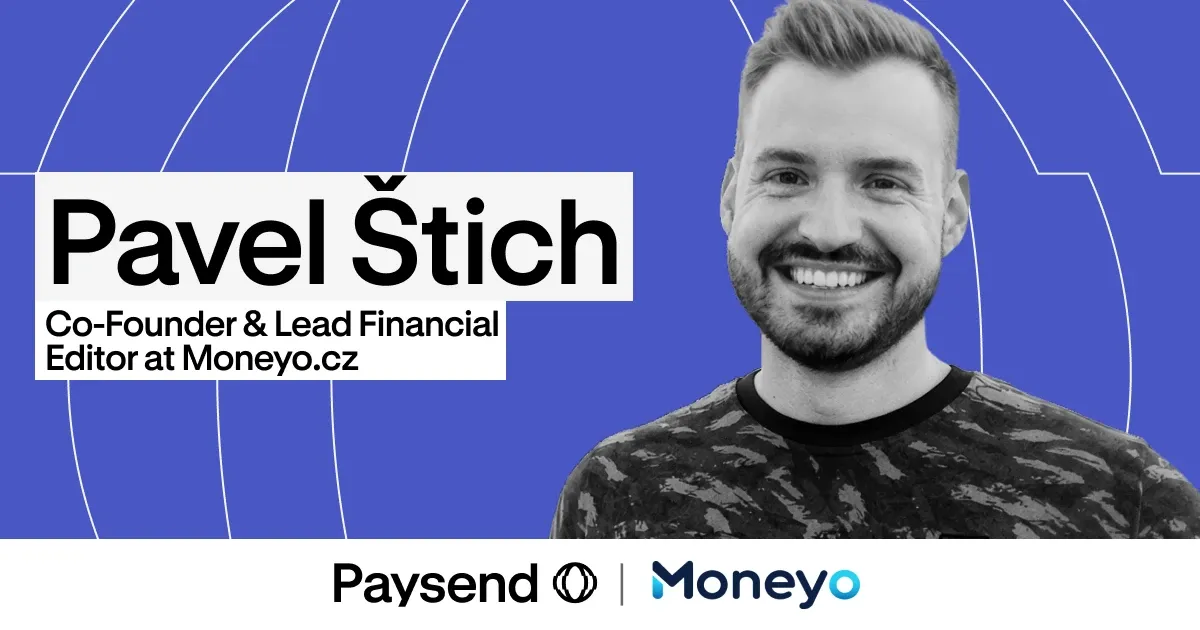
Pavel Štich od lat pomaga swoim czytelnikom rozwiązywać dokładnie ten problem. Jest współzałożycielem i redaktorem naczelnym ds. finansów w Moneyo.cz — niezależnej czeskiej platformie, która porównuje usługi przekazów pieniężnych, brokerów giełdowych i alternatywne inwestycje — a także Ambasadorem Paysend, co oznacza, że osobiście testuje wszystko, co poleca, wyjaśnia to prostym językiem i daje swoim czytelnikom ekskluzywne korzyści. Zapytaliśmy go, jak powstało Moneyo, kto je czyta i dlaczego wybrał Paysend.


