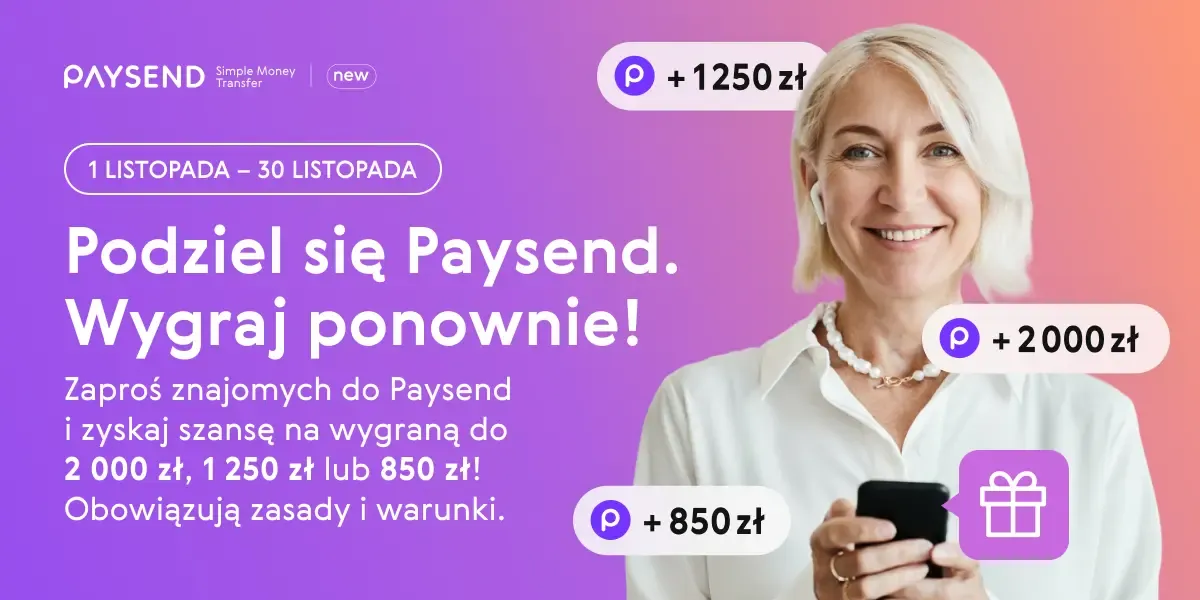
Twoja druga szansa, by wygrać nawet 2 000 zł, 1 250 zł lub 850 zł z Paysend!
Sprawdzaj swoją skrzynkę mailową i nasze social media — już wkrótce ogłosimy październikowych zwycięzców!
Nie udało się tym razem? Nic straconego — masz drugą szansę!
Konkurs Paysend trwa dalej w listopadzie — zdobądź nową możliwość wygrania nawet 2 000 zł, 1 250 zł lub 850 zł (lub równowartość) w bonusach Paysend.
Jak wziąć udział:
Od 1 do 30 listopada 2025 roku zapraszaj znajomych i rodzinę do Paysend.
Każde udane zaproszenie — gdy Twój znajomy zarejestruje się i wykona pierwszy przelew — to kolejny los w losowaniu.
Co możesz wygrać:
🥇 2 000 zł (lub równowartość w walucie lokalnej)
🥈 1 250 zł (lub równowartość)
🥉 850 zł (lub równowartość)
Im więcej zaproszonych znajomych, tym większe szanse na wygraną.
A nawet jeśli nie wygrasz, dalej możesz korzystać z naszego programu „Poleć znajomego”, w którym otrzymujesz 7.50 zł za każdy z pierwszych 12 przelewów Twojego znajomego (do 90 zł łącznie).
Disclaimer:
Dla mieszkańców EOG i Wielkiej Brytanii, którzy ukończyli 18 lat. Czas trwania: 1–30 listopada 2025 r. Pełne warunki: https://paysend.com/marketing-tc Organizator: Paysend Group Limited.
Najnowsze posty
Co miesiąc tysiące osób pracujących w Czechach wysyła część wypłaty do domu — wielu z nich to Ukraińcy wspierający rodzinę za granicą. A tradycyjna droga utrudnia to, co powinno być proste: przelewy bankowe wymagające IBAN i kodów SWIFT, opłaty, które widać dopiero, gdy pieniądze już zniknęły, oraz dni oczekiwania, podczas gdy ktoś w domu na nie liczy.
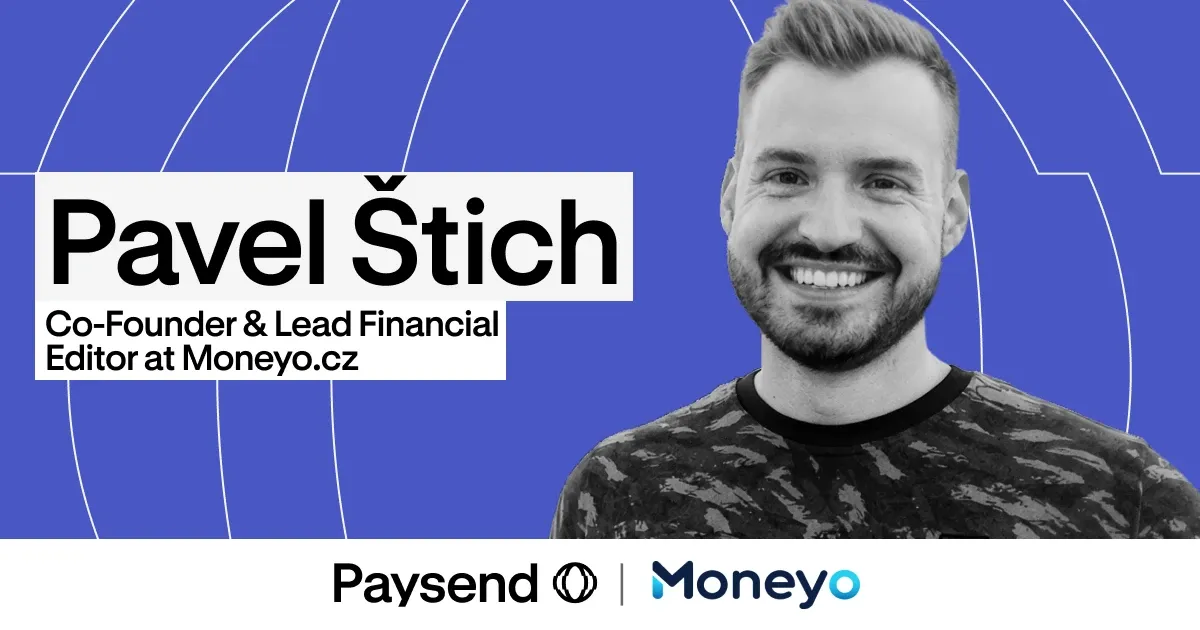
Pavel Štich od lat pomaga swoim czytelnikom rozwiązywać dokładnie ten problem. Jest współzałożycielem i redaktorem naczelnym ds. finansów w Moneyo.cz — niezależnej czeskiej platformie, która porównuje usługi przekazów pieniężnych, brokerów giełdowych i alternatywne inwestycje — a także Ambasadorem Paysend, co oznacza, że osobiście testuje wszystko, co poleca, wyjaśnia to prostym językiem i daje swoim czytelnikom ekskluzywne korzyści. Zapytaliśmy go, jak powstało Moneyo, kto je czyta i dlaczego wybrał Paysend.

Sending money digitally is quick and convenient, but it also involves important security, verification, and fraud prevention checks. In most cases these checks happen automatically in the background.
If you’ve ever wondered why Paysend asks you to verify your identity, why a transfer might be reviewed, or how your money is protected, the answer is simple: these processes are designed to keep you, your money, and your recipient safe.
Every digital money transfer relies on trust, regulation, and security systems working together. While these checks can sometimes feel like an extra step, they are a standard and essential part of how modern money transfers stay secure.


