New! Send Cash Payouts from the USA to the Philippines with Paysend
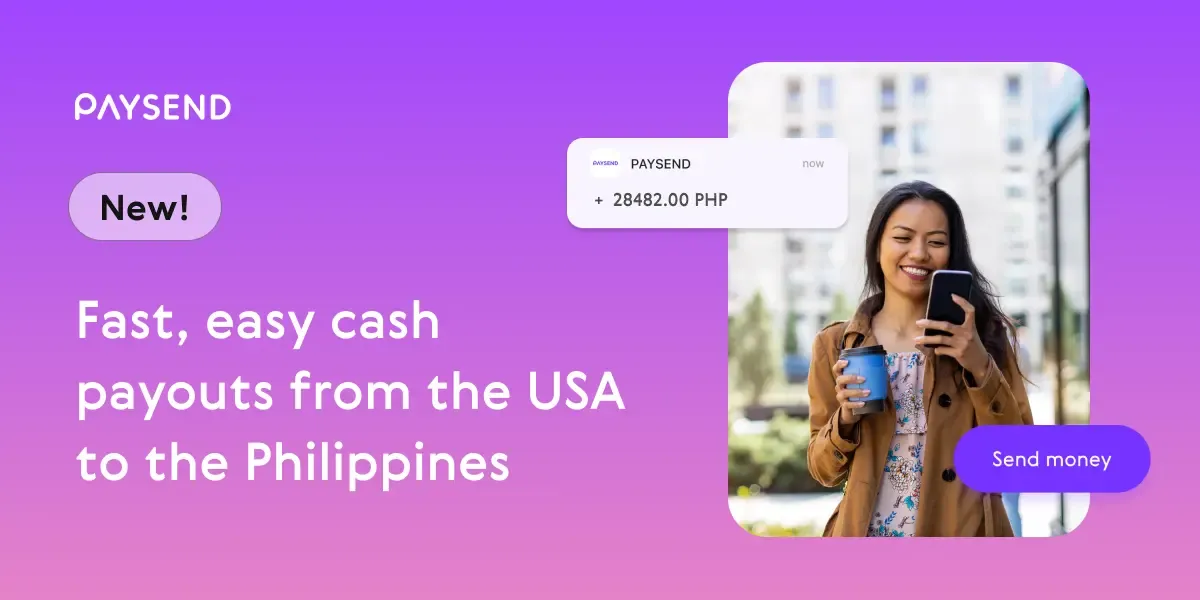
If you’ve ever needed to send money from the USA to the Philippines, you know how important it is to get funds to your recipient quickly, securely, and in a way that’s convenient for them. Paysend now offers cash payouts from the USA to the Philippines, so your recipient can collect money in cash at a trusted location — no bank account needed.
This new option gives your loved one’s greater flexibility and more choice in how they receive support. Whether you’re helping with tuition fees, household expenses, or a special occasion, cash pickup ensures the money gets to them in a way that works best for their needs.
Why cash payouts can be a smart choice
While card-to-card or bank transfers are fast and secure, there are times when cash is simply more practical. Not everyone has a bank account, and in some areas of the Philippines, cash can be easier to use.
With Paysend’s cash payout option, funds are available at trusted, reputable locations nationwide. Your recipient doesn’t have to wait for a bank to process a transfer or travel far to collect the money. They can pick up their funds quickly and use them right away — whether that’s paying school fees, buying groceries, or covering unexpected expenses.
How to send a cash payout from the USA to the Philippines
- Open the Paysend app or go to paysend.com.
- Select the Philippines as your destination country.
- Choose Cash pickup as the delivery method.
- Enter your recipient’s details and select their preferred pickup network.
- Confirm your payment.
- Let your recipient know — they’ll get a notification when the money is ready for collection.
Your money will be sent in real time; however, transfer delivery times may vary based on recipient bank processing, compliance checks, or other factors.
Why choose Paysend for USA-to-Philippines cash payouts?
- Speed – We process payouts quickly so your recipient can get their cash fast.
- Security – Bank-level encryption and fraud prevention keep your money safe.
- Convenience – Send from your phone or computer 24/7.
- Nationwide coverage – Pick up cash from multiple locations across the Philippines.
With Paysend, you can send money in just a few taps — and your loved ones can collect it in the way that suits them best.
The educational materials on this site are provided for informational purposes only and do not reflect the opinions of Central Bank of Kansas City, Member FDIC. Educational materials may contain links to content on third-party websites, which are provided for your convenience; please note that linked sites may have a privacy and security policy different from our own, and we cannot attest to the accuracy of information. The Central Bank of Kansas City does not guarantee nor expressly endorse any particular business, product, service, or third-party content.
Najnowsze posty

Co miesiąc tysiące osób pracujących w Czechach wysyła część wypłaty do domu — wielu z nich to Ukraińcy wspierający rodzinę za granicą. A tradycyjna droga utrudnia to, co powinno być proste: przelewy bankowe wymagające IBAN i kodów SWIFT, opłaty, które widać dopiero, gdy pieniądze już zniknęły, oraz dni oczekiwania, podczas gdy ktoś w domu na nie liczy.
Pavel Štich od lat pomaga swoim czytelnikom rozwiązywać dokładnie ten problem. Jest współzałożycielem i redaktorem naczelnym ds. finansów w Moneyo.cz — niezależnej czeskiej platformie, która porównuje usługi przekazów pieniężnych, brokerów giełdowych i alternatywne inwestycje — a także Ambasadorem Paysend, co oznacza, że osobiście testuje wszystko, co poleca, wyjaśnia to prostym językiem i daje swoim czytelnikom ekskluzywne korzyści. Zapytaliśmy go, jak powstało Moneyo, kto je czyta i dlaczego wybrał Paysend.

Sending money digitally is quick and convenient, but it also involves important security, verification, and fraud prevention checks. In most cases these checks happen automatically in the background.
If you’ve ever wondered why Paysend asks you to verify your identity, why a transfer might be reviewed, or how your money is protected, the answer is simple: these processes are designed to keep you, your money, and your recipient safe.
Every digital money transfer relies on trust, regulation, and security systems working together. While these checks can sometimes feel like an extra step, they are a standard and essential part of how modern money transfers stay secure.


