How Paysend is already meeting worldwide remittance affordability goals

Over the past few years, digital remittances served as a lifeline to stay financially connected with loved ones living abroad during the COVID-19 pandemic. Now, despite moving into an era where people are more likely to travel and get together with friends and family, remittances are still expected to rise.
Digital transfer options are continuing to grow in popularity as they offer a convenient way to send money to loved ones living internationally. In fact, the remittance market is expected to grow nearly 5% this year.
In addition to convenience, cost is also a factor that people often consider when choosing between different services. So, why has the price of sending a remittance risen and what can be done to mitigate cost for you and your loved ones?
Remittances are growing, but cost and fees don’t have to
The global average cost of a remittance in recent years was a shocking 6.5%. Despite many digital remittance companies touting low transaction prices, people are still subject to spending more on money transfer costs due to hidden fees. Historically, there has been a lack of cost transparency within our industry that has resulted in people paying high fees for remittances.
There are several factors that hike up remittance prices – exchange rates that fluctuate, transfer fees, receival fees and more. These charges, often not accounted for at the beginning of a transfer setup, have caused billions of people to spend more money to make international transfers and payments than initially intended.
That’s why the United Nations set a worldwide mobility goal to make digital money transfers fees less than 3% by 2030. Experts believe that with greater price transparency throughout the entire transfer process, we can achieve lower remittances costs globally.
Paysend promises to make money transfers affordable for all
Here at Paysend, we understand the needs of our customers and aim to make digital money transfers accessible (and affordable) for all. Despite having several years left, we’ve already pushed to achieve the UN’s goal as we charge a flat $2 per transfer with no hidden fees.
We also make it easier for customers to view how much money will be spent on exchange rates using our Exchange Calculator.
“Paysend helped me and my family a lot by offering a low transfer fee and great service - very simple and convenient,” said a customer that transfers money to Uzbekistan.
Looking for a way to send money abroad without the confusion of hidden fees and unnecessary upcharges? Download the Paysend Global Transfers app* from the App Store or Google Play today.
*Standard data rates from your wireless service provider may apply.
Últimas publicações

O regresso às aulas pode ser uma das alturas do ano em que mais sentimos a distância de quem nos é próximo. É também uma das épocas mais dispendiosas: material escolar, uniformes, propinas e despesas do dia a dia acumulam-se muitas vezes ao mesmo tempo. Muitas pessoas ajudam os familiares no estrangeiro a fazer face a estes custos, enviando-lhes dinheiro. Para ajudar nesta altura do ano, os novos clientes da Paysend beneficiam de um primeiro envio sem taxas e de uma taxa de câmbio mais vantajosa durante o período de regresso às aulas.
Quer esteja a ajudar a pagar propinas ou despesas do dia a dia, uma transferência internacional permite apoiar quem precisa, precisamente quando é necessário. Com a Paysend, pode enviar dinheiro para mais de 170 países através de métodos de pagamento simples e seguros. Veja como se pode registar gratuitamente e aproveitar a oferta.
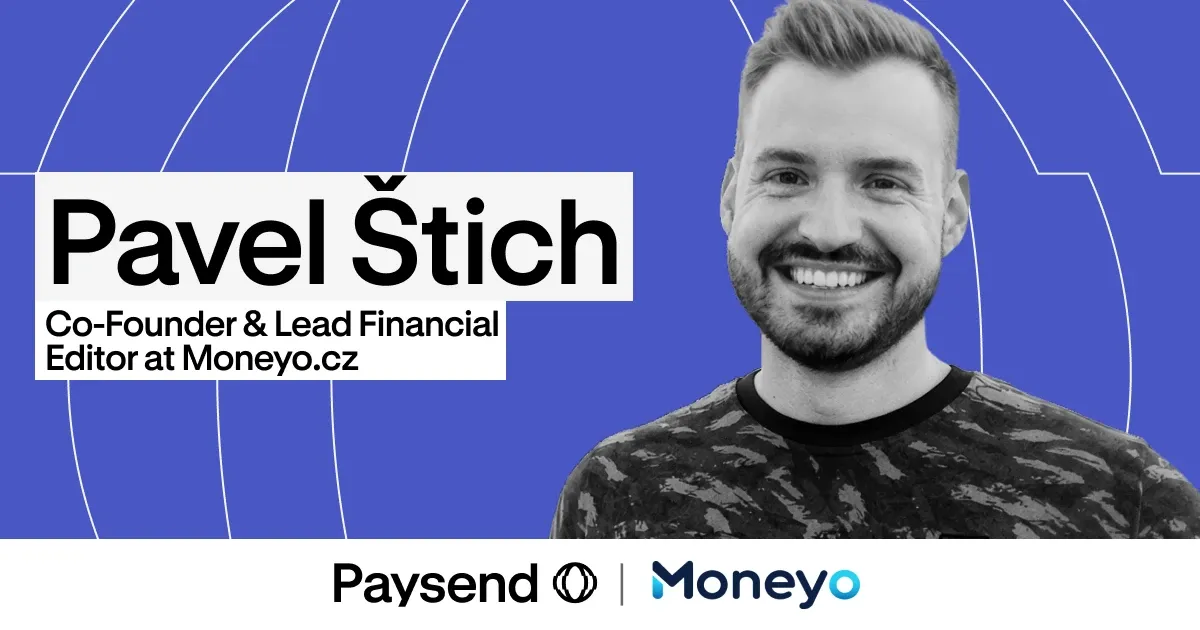
Todo mês, milhares de pessoas que trabalham na República Tcheca enviam parte do salário para casa — muitas delas são ucranianos que sustentam a família do outro lado da fronteira. E o caminho tradicional torna mais difícil algo que deveria ser simples: transferências bancárias que exigem IBAN e códigos SWIFT, tarifas que só aparecem depois que o dinheiro já saiu, e dias de espera enquanto alguém em casa conta com esse valor.
Pavel Štich ajuda seus leitores a resolver exatamente esse problema há anos. Ele é cofundador e editor-chefe de finanças da Moneyo.cz, uma plataforma tcheca independente que compara serviços de transferência de dinheiro, corretoras e investimentos alternativos — e Embaixador da Paysend, o que significa que ele testa pessoalmente tudo o que recomenda, explica de forma simples e oferece aos seus leitores vantagens exclusivas. Perguntamos a ele como surgiu a Moneyo, quem a lê e por que escolheu a Paysend.


