Celebrate Chinese New Year with fast and secure money transfers to China
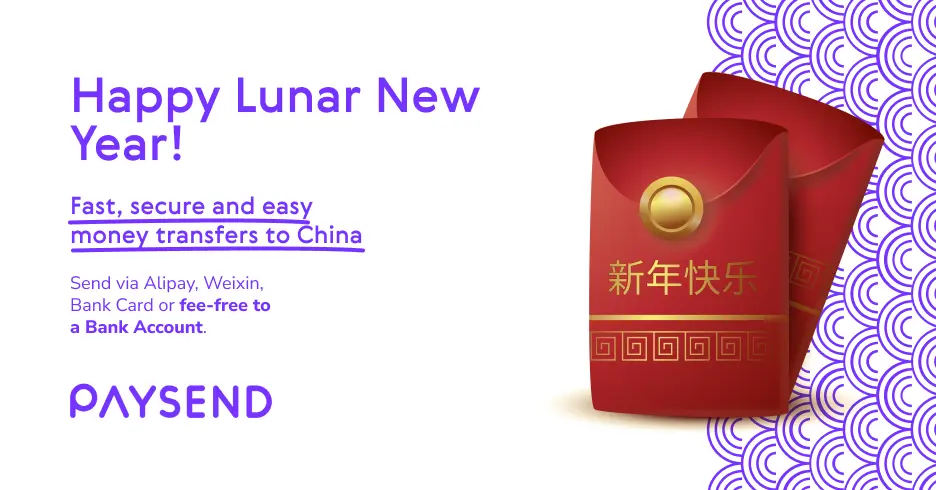
As the Year of the Snake approaches, it’s time to celebrate Chinese New Year - a time for joy, family reunions and cherished traditions. For many, the Lunar New Year is also an opportunity to show love and support to family and friends, no matter where they are in the world. And Paysend is here to make it easier to stay connected by providing fast, secure and easy ways to send money to China.
Why Chinese New Year is special
Chinese New Year or Spring Festival, is the most important holiday in China. Families gather to enjoy traditional meals, exchange red envelopes (hongbao) and celebrate with fireworks and festivities. It’s a time for togetherness, reflection and hope for the year ahead.
For those living outside of China, sending financial support to loved ones is a meaningful way to be part of the celebrations, even from afar.
Why choose Paysend for sending money to China?
Whether it’s helping your family prepare for the festive feast or sending hongbao, Paysend offers reliable and convenient money transfer solutions:
- Fee-free transfers to bank accounts: Send money directly to a bank account in China with zero fees.
- Flexible options: Choose fast and secure delivery methods like Alipay, Weixin (WeChat Pay) or bank cards, all paid out in Chinese yuan (CNY).
- Fast transfers: Paysend transactions to China arrive in minutes, making sure your support reaches loved ones in time for the celebrations.
- Transparent rates: With competitive exchange rates and no hidden fees, you’ll know exactly how much your recipient will receive.
- Global security standards: Paysend’s advanced encryption technology ensures your money and data are safe every step of the way.
How to send money to China with Paysend
Getting started is simple:
- Sign up or log in: You can create an account on the Paysend app or website.
- Choose who to end to: Select ‘New recipient’ or select from your recipients
- Select China as your destination: You’ll see CNY as the receiving currency.
- Choose your delivery method: Opt for Alipay, Weixin, bank accounts or bank cards.
- Enter recipient details: Provide the recipient’s information, such as their bank account or card details.
- Enter the amount to send: View the exchange rate and fees upfront before confirming your transfer. It’s fee-free when you send to a bank account.
- Confirm and send: Your loved ones will receive their funds quickly and securely.
New to Paysend and not set up your account yet? Follow our easy step-by-step guide.
Join the celebration from anywhere
This Chinese New Year, celebrate the Year of the Snake by supporting your family and friends in China. With Paysend, sending money is as easy as tapping a button — whether it’s to contribute to a festive meal, help with travel expenses or share a little extra joy with hongbao.
Make this Lunar New Year memorable for your loved ones in China.
Mga Pinakabagong Post
Here's the short answer: yes, you can use a credit card to get money into someone's bank account abroad. "Credit card to bank transfer" means exactly that — you fund the transfer with your credit card, and your recipient receives it in their bank account. Or on their card, in their wallet, or as cash to collect, depending on where they are.
The card and the bank account do different jobs. Your card pays for the transfer. A provider like Paysend then pays the money out through local systems on the other end. It's one flow, and it takes about a minute in the app.
One thing worth knowing before you start: a credit card is usually the most expensive way to fund a transfer. Some issuers treat it as a cash advance, and credit tends to carry higher payment fees than debit. You'll always see the full cost, exchange rate included, before you confirm anything. What follows is: the ways your money can arrive, what each one costs, how fast it gets there, and the cheaper routes worth checking first.

Every month, thousands of people working in the Czech Republic send part of their payday home — many of them Ukrainians supporting family across the border. And the traditional route makes it harder than it should be: bank wires that ask for IBANs and SWIFT codes, fees that only show up after the money's gone, and days of waiting while someone at home is counting on it.
Pavel Štich has spent years helping his readers solve exactly that. He's Co-Founder and Lead Financial Editor at Moneyo.cz, an independent Czech platform that compares money transfer services, stock brokers, and alternative investments — and a Paysend Ambassador, which means he tests what he recommends, explains it plainly, and brings his readers reader-only perks. We asked him how Moneyo started, who reads it, and why he chose Paysend.


