Share the Holiday Joy with Paysend: 2x Transfers with Zero Fees & Special FX
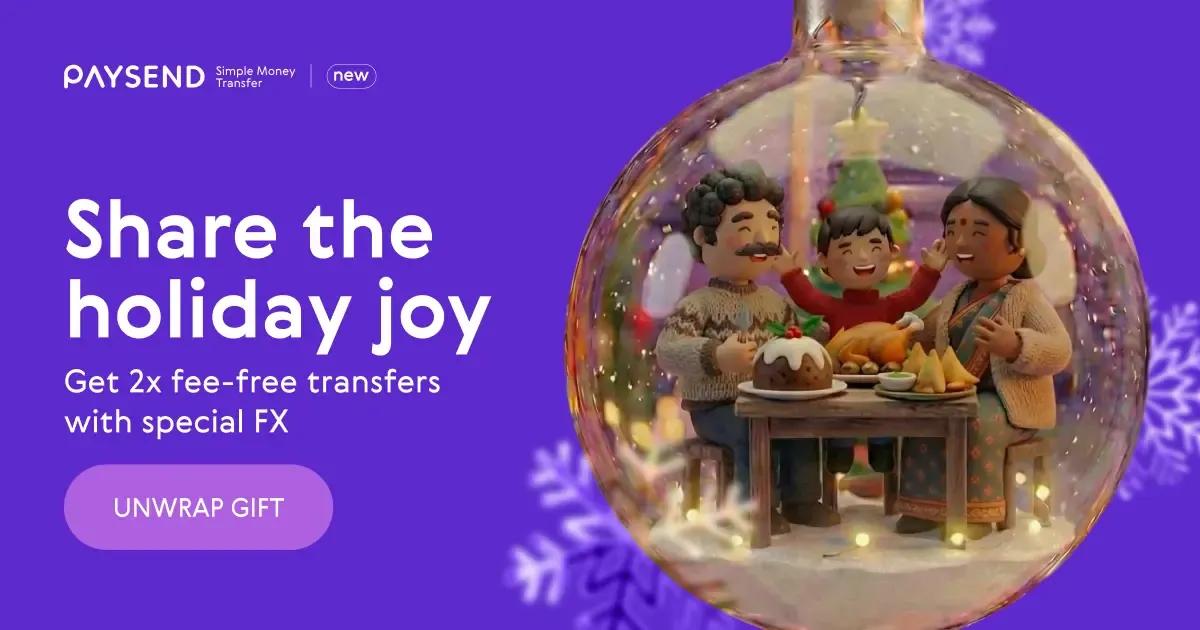
For new customers in the EEA, UK and Canada. 11 December – 9 January
The holiday season is a time for giving, connecting, and spreading joy, especially to those we love, near and far. At Paysend, we know that sometimes the most meaningful gifts don’t come wrapped in paper or ribbons…they’re the support, care and financial help you send to family and friends abroad.
This holiday, from 11 December to 9 January, we’re welcoming new customers in the EEA, UK and Canada with something special:
2x transfers with zero fees and special FX — our way of helping you share the joy more easily than ever.
With over 11 million customers worldwide, Paysend is here to make cross-border giving simple, fast, and stress-free during the moments that matter most.
How to Make the Most of Your Holiday Welcome Gift
- Sign up as a new customer in the EEA, UK and Canada
- Send your first transfer — quick, secure, and with zero fees.
- Send your second transfer, also completely free.
- Enjoy special FX, giving your loved ones more of what you send.
Whether you’re helping a family member celebrate, covering seasonal expenses, or simply saying “I’m thinking of you,” Paysend helps your support reach them instantly — so you can stay close, even from afar.
From Our Paysend Family to Yours
This season is about connection, generosity, and shared moments — near or far. As we wrap up the year, we want to say a heartfelt thank you to every customer, partner, sender, and recipient.
Here's to an even brighter 2026: more connections, more innovation, and more lives changed.
How to Sign Up and Get Started
Joining Paysend only takes a minute. Here’s how new customers can get started:
- Download the Paysend app on iOS or Android, or visit the Paysend website.
- Create your account using your email or mobile number.
- Verify your identity through quick and secure onboarding.
- Add your preferred payment method.
- Make your first transfer — simple, fast, and secure.
You’ll be ready to support the people who matter most in just a few steps.
Unwrap Your Gift Today — 2x transfers with zero fees & special FX (11 December – 9 January)
Disclaimer: Complete two (2) international transfers from the UK, EEA or Canada with no minimum spend required. No promo code required. Two (2) use per customer. The promotional FX rates are applied automatically and reflect a discount on Paysend’s standard FX markup rate. FX rates are determined by Paysend at its sole discretion and may include a margin. Rates are subject to change. Third-party fees may apply. Not valid for same-currency transfers. TERMS AND CONDITIONS APPLY.
Son Yazılar

Her ay, Çek Cumhuriyeti'nde çalışan binlerce kişi maaşının bir kısmını eve gönderiyor — bunların çoğu, sınırın diğer tarafındaki ailesini destekleyen Ukraynalılar. Ve geleneksel yol, basit olması gereken bir işi zorlaştırıyor: IBAN ve SWIFT kodu isteyen banka havaleleri, para gittikten sonra ortaya çıkan ücretler ve evde birinin o paraya güvendiği günler süren bekleyişler.
Pavel Štich yıllardır okuyucularının tam olarak bu sorunu çözmesine yardımcı oluyor. Para transferi hizmetlerini, borsa aracı kurumlarını ve alternatif yatırımları karşılaştıran bağımsız bir Çek platformu olan Moneyo.cz'nin Kurucu Ortağı ve Finans Yayın Yönetmeni — ve aynı zamanda bir Paysend Elçisi, yani tavsiye ettiği her şeyi kendisi test ediyor, sade bir dille anlatıyor ve okuyucularına özel avantajlar sunuyor. Ona Moneyo'nun nasıl başladığını, kimlerin okuduğunu ve neden Paysend'i seçtiğini sorduk.

Sending money digitally is quick and convenient, but it also involves important security, verification, and fraud prevention checks. In most cases these checks happen automatically in the background.
If you’ve ever wondered why Paysend asks you to verify your identity, why a transfer might be reviewed, or how your money is protected, the answer is simple: these processes are designed to keep you, your money, and your recipient safe.
Every digital money transfer relies on trust, regulation, and security systems working together. While these checks can sometimes feel like an extra step, they are a standard and essential part of how modern money transfers stay secure.


