Paysend Embed: the widget powering seamless cross-border payouts
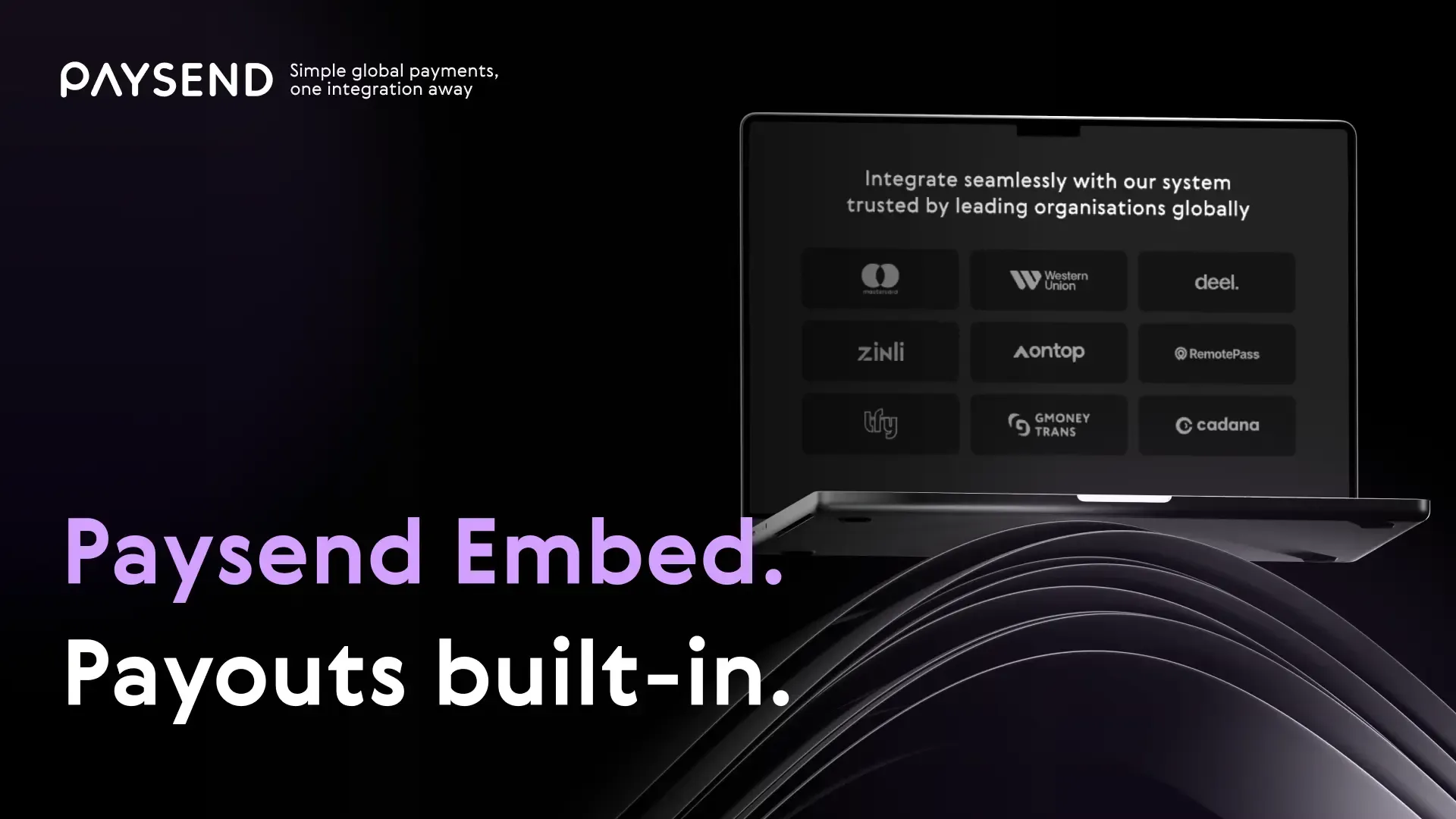
Behind every smooth international transaction is powerful infrastructure. With Paysend Embed, licensed institutions, fintechs, and digital platforms can integrate instant, compliant payouts into their apps, bringing their users closer to a truly borderless experience.
As part of Paysend’s mission to build the world’s largest digital payment network, Embed helps partners break barriers in cross-border money movement. It’s designed for teams that want to stay in control of their user experience, while Paysend powers the secure, compliant movement of funds behind the scenes.
Built for licensed institutions
For banks, regulated financial institutions, and licensed entities, Embed offers a white-label-ready widget that fits seamlessly into existing digital ecosystems. You maintain full control of your customer experience while Paysend handles global delivery, compliance, and infrastructure.
Key features:
- Native widget for app and web integration
- Tier 1 licensing and infrastructure
- Fast go-to-market
- Enterprise-level scalability
Built for fintechs
For startups and scaleups ready to expand across borders, Embed accelerates growth. With one integration, fintechs can embed international payouts directly into their products, unlocking new functionality, new markets, and new revenue streams in days, not months.
Key features:
- Fully embeddable widget
- Access to 100+ global corridors
- Licensed and compliant rails
- Rapid deployment
Built for the creator and gig economy
Modern platforms are global by default, and their users expect to get paid the same way. Embed empowers gig and creator platforms to deliver real-time* payouts inside their own ecosystems, giving freelancers, creators, and contractors faster access to their earnings.
Key features:
- Multi-currency, multi-market support
- Mobile-first widget integration
- Real-time payouts to card, wallet, or bank
- Scalable for high-volume businesses
Breaking barriers in global payouts
Paysend Embed addresses the biggest pain points in cross-border money transfer – compliance, licensing, and infrastructure – so partners can focus on innovation. It’s part of our mission to bring simple, secure money transfer to all, including the underserved, while giving businesses the tools to scale globally with confidence.
*Please note: Your money will be sent in real time; however, transfer delivery times may vary based on recipient bank processing, compliance checks, or other factors.
最新帖子

Here's the short answer: yes, you can use a credit card to get money into someone's bank account abroad. "Credit card to bank transfer" means exactly that — you fund the transfer with your credit card, and your recipient receives it in their bank account. Or on their card, in their wallet, or as cash to collect, depending on where they are.
The card and the bank account do different jobs. Your card pays for the transfer. A provider like Paysend then pays the money out through local systems on the other end. It's one flow, and it takes about a minute in the app.
One thing worth knowing before you start: a credit card is usually the most expensive way to fund a transfer. Some issuers treat it as a cash advance, and credit tends to carry higher payment fees than debit. You'll always see the full cost, exchange rate included, before you confirm anything. What follows is: the ways your money can arrive, what each one costs, how fast it gets there, and the cheaper routes worth checking first.

每个月,数以千计在捷克工作的人都会把部分工资寄回家——其中许多是支持着边境另一边家人的乌克兰人。而传统方式让本应简单的事情变得更复杂:银行汇款需要 IBAN 和 SWIFT 代码,手续费往往在钱汇出后才显现,还要等上好几天,而家里的人正等着这笔钱应急。
多年来,Pavel Štich 一直在帮助他的读者解决这个问题。他是 Moneyo.cz 的联合创始人兼财经主编——这是一个独立的捷克平台,专门比较汇款服务、股票经纪商和另类投资;同时他也是 Paysend 大使,这意味着他会亲自试用自己推荐的一切,用通俗易懂的方式讲解,并为读者带来专属福利。我们请他谈了谈 Moneyo 是如何诞生的、谁在阅读它,以及他为什么选择了 Paysend。


