Back to School: Traditions, Costs, and How Families Prepare Around the World
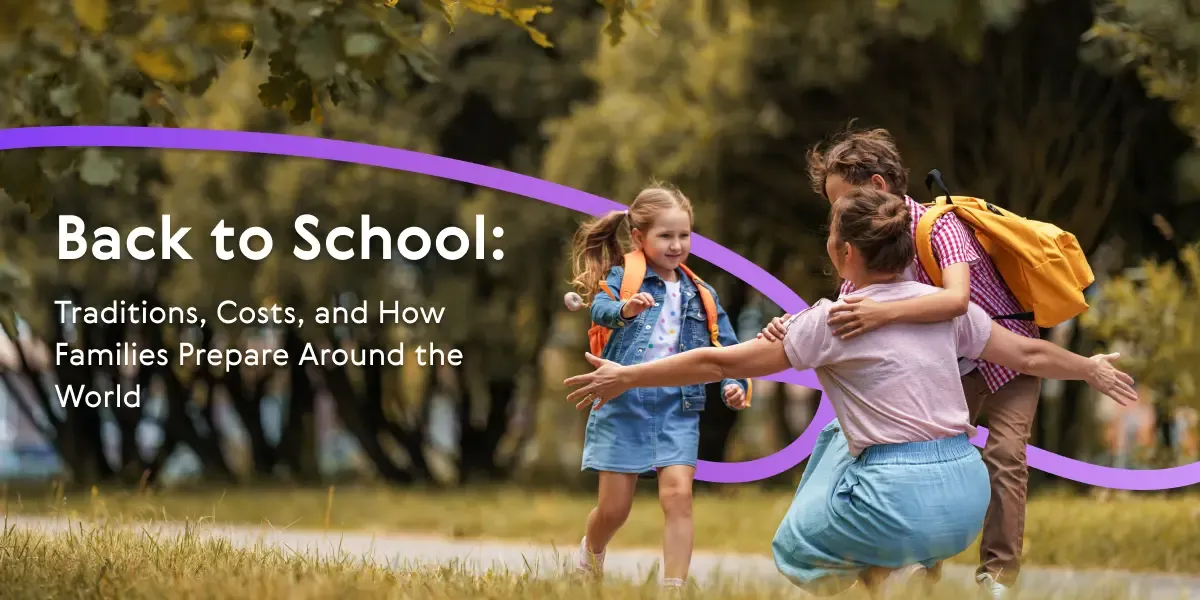
When does back-to-school season start, and what does it mean for families globally?
For most countries, back-to-school happens in late August or early September, marking the end of summer break. It’s a time when parents everywhere get ready to send kids back to classrooms, whether that means paying tuition fees, buying uniforms, or supporting children abroad. From first-day traditions to rising education costs, here’s what back-to-school looks like around the world – and how you can prepare for the year ahead.
When do children return to school around the world?
The start of the school year varies across the globe, shaped by local climates, culture, and national calendars. Knowing these dates can help parents plan transfers, shopping, and childcare schedules.
- United States and Canada: Back-to-school season typically begins in late August or early September after summer break.
- United Kingdom: Children return in early September after a six-week summer holiday.
- Australia and New Zealand: The academic year starts in late January or early February to align with their summer ending.
- India: Schools reopen in June after the hot April–May summer break.
- Japan: The school year begins in April, coinciding with cherry blossom season and symbolizing fresh starts.
- Brazil: Classes resume in late January or early February, following their summer holiday.
Different education traditions worldwide
Educational traditions often reflect what each country values most in raising future generations. Here are some unique examples:
In Japan, students clean their classrooms daily to teach responsibility and respect for shared spaces. Finland’s education system emphasizes wellbeing, offering minimal homework, shorter school days, and outdoor learning to foster balanced growth.
In Germany, kids receive a “Schultüte” – a cone filled with school supplies and treats – on their first day to celebrate the milestone. South Korean students often study long hours in after-school academies called hagwons to keep up with rigorous expectations. In Kenya, uniforms are required and academic progression is determined by national exams, while Brazil operates morning and afternoon shifts in schools due to overcrowding, maximizing facilities for all students.
These traditions shape children’s attitudes toward learning and create lifelong memories linked to school.
Private school education: Global stats
Private schooling is popular for families who want more choices or specialized education, but it comes at a cost. Here’s an overview of average private school fees worldwide:
- United States: Private tuition averages $12,000 per year, with top schools charging over $50,000 annually.
- United Kingdom: Private day schools cost about £15,000 a year, with boarding schools exceeding £30,000.
- India: Fees range widely, from ₹40,000 ($480 USD) to over ₹300,000 ($3,600 USD) per year, depending on reputation.
- Brazil: Private schools in major cities cost around R$1,500 ($275 USD) per month.
- Australia: Fees vary from $5,000–$10,000 AUD annually for primary and up to $20,000+ AUD for secondary.
These numbers don’t include additional costs like books, uniforms, and extracurricular activities, making budgeting essential for families.
Average cost of school uniforms worldwide
Uniforms are a standard requirement in many countries, ensuring equity and discipline but adding to back-to-school expenses. Here’s a glimpse at typical uniform costs:
- United States: Private school uniforms range from $150 to $400 per year per child.
- United Kingdom: Parents spend an average of £250–£350 for a full set.
- Australia: Uniforms cost between $300 and $600 AUD depending on school requirements.
- India: More affordable, uniforms range from ₹1,000–₹3,000 ($12–$36 USD).
- Nigeria: Parents pay around ₦10,000–₦20,000 ($13–$26 USD).
- South Africa: Costs range from R1,500–R3,000 ($80–$160 USD).
Buying early can help parents secure better deals and ensure sizes are available before the school year begins.
How to get ready for a new school term
Back-to-school preparations go beyond shopping lists. Parents can set kids up for a confident start by:
- Planning ahead: Shop early to avoid last-minute stress, especially for uniforms and supplies.
- Checking health forms: Ensure vaccinations and school records are up to date.
- Adjusting routines: Shift bedtimes and wake-up times back to school schedules about a week before term starts.
- Talking about goals: Discuss your child’s hopes and concerns to build confidence and excitement.
These simple steps can make the first week smoother for everyone.
How to send a transfer with Paysend
Sending money with Paysend is easy and fast, letting you support your family for back-to-school expenses without hassle. Here’s how:
- Download the Paysend app or visit the website.
- Sign up or log in to your account.
- Select your recipient’s country and choose how they’ll receive the money (bank card, bank account, or digital wallet).
- Enter the amount to send and review the real-time exchange rate and fees upfront.
- Confirm your payment and send.
That’s it – your money is usually delivered within seconds*, so your family can access it quickly when they need it most.*Your money will be sent in real time; however, transfer delivery times may vary based on recipient bank processing, compliance checks, or other factors.
Why choose Paysend?
When it comes to sending money for tuition fees, uniforms, or daily expenses, here’s why Paysend is a trusted choice:
- Fast transfers: Most arrive in seconds.
- Low, fixed fees: Know what you’re paying upfront, with no hidden charges.
- Competitive exchange rates: Get great value for your money.
- Global reach: Send to over 100 countries worldwide.
- Secure: Fully regulated with bank-level encryption to keep your money and personal details safe.
- Easy to use: Simple app and website with step-by-step guidance.
Back to school isn’t just about pencils and backpacks. It’s about setting children up for success, wherever they live. Whether you’re paying tuition fees abroad, buying uniforms, or simply supporting everyday expenses, your help ensures they start the new term with confidence.
Ready to support your family this back-to-school season? Paysend is here to keep you connected with fast, secure, and low-cost international transfers.
The educational materials on this site are provided for informational purposes only and do not reflect the opinions of Central Bank of Kansas City, Member FDIC. Educational materials may contain links to content on third-party websites which are provided for your convenience; please note that linked sites may have a privacy and security policy different from our own, and we cannot attest to the accuracy of information. The Central Bank of Kansas City does not guarantee nor expressly endorse any particular business, product, service, or third-party content.
最新帖子

If you're working in one country and supporting family in another, you already know the drill. Payday lands, and the money needs to be with them – not in three working days, not after a bank somewhere in the middle has taken its turn with it. Today, in their hands, ready to spend.
Here's the good news: a card to card transfer sends money straight from your card to someone else's, using the card networks instead of a standard bank transfer. No IBAN, no BIC, no sort code – just a card number. Let's get you sending.
好消息——9月推荐奖励翻倍。整个2026年9月,你邀请的每位朋友加入 Paysend,都能为你带来$6,而不是平时的$3。多邀请几位朋友,本月你最多可以赚取$72,或当地货币的等值金额。
这就是你已经熟悉的推荐计划。只是到9月30日之前,奖励金额翻倍。以下是它的运作方式,以及如何充分利用这次优惠。


