An die Zukunft denken.
Lesen Sie die neuesten Paysend-Artikel
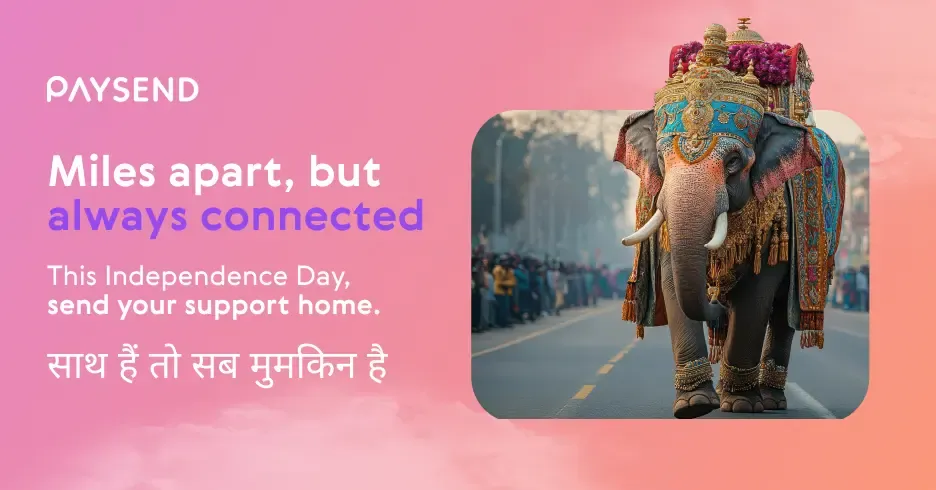
Every year on 15 August, India celebrates its Independence Day — a national holiday steeped in pride, history, and vibrant traditions. Whether you’re in Delhi, Dubai, or Dublin, it’s a day that unites Indian communities across the globe in honor of freedom, sacrifice, and progress.

Every year on July 28, the vibrant streets of Peru come alive with music, dance, and celebration. It's Peru’s Independence Day, one of the country’s most important national holidays and a time to honor its freedom, culture, and community. Whether you're Peruvian, part of the global diaspora, or simply curious about the country’s history, this guide has everything you need to know about Peruvian Independence Day — from its origins to how it’s celebrated today.

If you’re sending money from Poland to family, friends, or loved ones in Ukraine, we’ve got good news for you.
Paysend is offering a special improved FX rate on all transfers from Poland to Ukraine until 31 July 2025. That means you get more Ukrainian hryvnia (UAH) for every Polish zloty (PLN) you send – helping your money go further when it matters most.

Independence Day in the United States is celebrated every year on July 4th. This national holiday commemorates the adoption of the Declaration of Independence on July 4, 1776, when the original thirteen colonies formally declared their separation from British rule. Today, it’s one of the most widely observed holidays in the U.S., marked by fireworks, parades, barbecues, and patriotic displays across the country.


