 5 min
5 minHow we use an agile approach and company-wide demo days to empower all of our teams
At Paysend, we have a team spread out across 38 countries, building products to delight our 7 million customers around the world.
Having a remote and distributed team means that we need to put in place rituals to ensure that everyone in our team shares a common understanding of our product strategy and priorities, so that they can make the best decisions day to day on behalf of our customers and the company.
We would like to share one of our most important rituals, which is our monthly company Demo Day.
Before getting to our demo day, it’s important to know how we think about building products at Paysend. Every year we renew our company product strategy based on what we have learned over the past year: this includes our successes; our failures; new strengths we have acquired; and new opportunities that have opened up in the market. The outcome is a product strategy document that we share and discuss with the whole company, and something we give to new team members so that they have complete clarity on what we’re trying to achieve.
We then break this strategy apart into distinct and non-overlapping goals (we use the OKR framework at Paysend) and then create teams of Paysenders who then take ownership of identifying how to achieve these goals. These teams then fully absorb themselves in their assigned areas, and then work tirelessly to deliver for our customers.
However, when teams fully absorb themselves in their own areas, they can sometimes lose touch with what other teams are doing. This can lead to teams making product decisions that contradict one another; teams creating experiences that are not coherent with each other; or teams duplicating work. As a result, we needed to find a way to allow teams to come together regularly to understand what is happening across the company - therefore allowing teams to share ideas and feedback; and find opportunities to work together more efficiently.
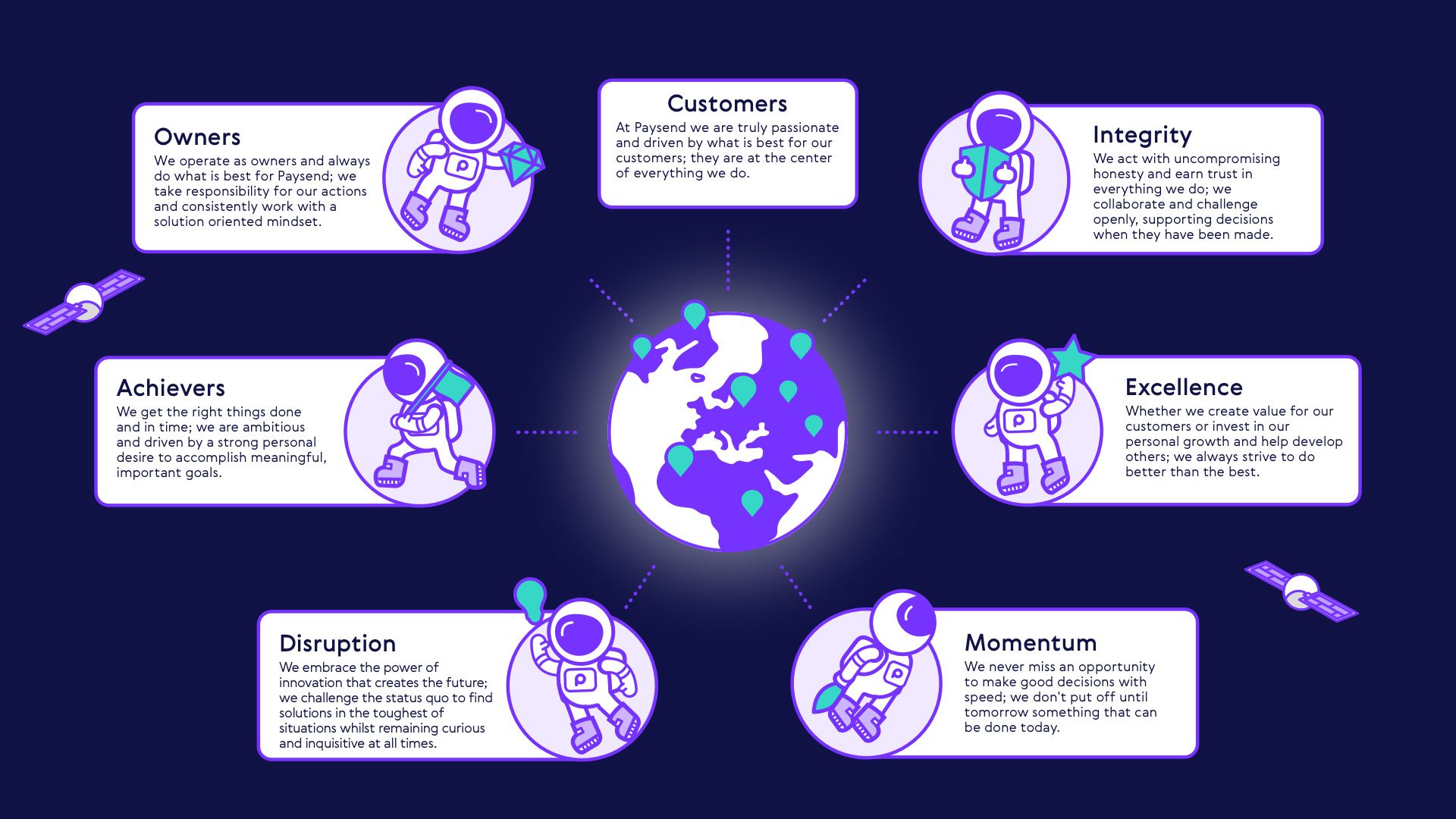
While regularly demoing work is a common practice, and part of standard SCRUM rituals, they can become harder to manage as teams grow in size, and therefore can stop happening. Despite this, and having some unique challenges being a remote-first and distributed team, we decided that a Demo Day is crucial for our teams to stay close to one another, and deliver our product strategy together.
We launched our first company Demo Day in February, which is run monthly by Ksenia in our People & Culture team. Here are some of the things she has found are important in making them successful.
- Have an overall narrative or story to tell in each session.
- Ask all Paysenders who demo to start with explaining how what they’re doing contributes to Paysend’s product strategy and OKRs.
- Make sure there is an environment where people can be open and receptive to feedback
Each Paysender is considered an owner of our products and is equally responsible for their quality to the user. As such, we decided to expand the standard scope of SCRUM rituals and make the demo open to the entire company, where each employee can share feedback, offer ideas or talk about problems he encountered when using it. Fundamentally the we believe that the best ideas can come from anywhere and this is how we strive to make sure everyone can have a voce.
We feel that this is incredibly cool! Everyone at Paysend has an impact on development, and everyone is openly sharing their opinions in order to get the best possible results. - Show real things
Our Demo Days, stay true to their name, they are all about showcasing real changes in real products; test environments or production. We are not focusing on theory and presentations but instead focus on sharing the results of work and building the road map of future development. - Talk about the people behind the thing being demoed. Getting to know your team is just as important as getting to know the product.
Fundamentally we want to hit the aggressive targets we set, but we don’t limit ourselves to tactical goals. During each Demo Day, we share details about our products and the teams that create them. We share achievements and challenges, which helps everyone level up their understanding as well as increase the likelihood of finding great solutions that can delight our customers. This is the essence of striving for excellence at Paysend. - Working remotely definitely means that people in the company have to try harder to communicate and build up their networks.
Typically colleagues may face each other only when they have common tasks. If you don't have cross-functional work with other departments then most likely you may not know other colleagues or understand what they do. This is why joint events and activities are so important to us at Paysend. - Talk about the impact and challenges.
The world does not stand still, which is why it's so important to adapt quickly to changes, improving our products in time to make users happy. It's events like these that help us learn more about user needs and make Paysend products better, guided by our product missions and our principles.
And here are some of the things our team says about our Demo Day: